Driver Resources Center
D.O.T.
Weight Limits and Bridge Laws:
What you need to know:
Gross Weight on the tractor and trailer cannot exceed more than 80,000 lbs. If weight is distributed on drives and tandems (legally), we can exceed the weight limit by 350-400 lbs. This exception is dependent on the weight of the APU. If APU weighs 350 lbs, we are allowed 350 lbs overage on tandem drive axel – 34,350 lbs. This exemption varies by state.
It is not always necessary for a customer and/or driver to rearrange the entire load. The load may be adjusted to a legal weight by sliding the tandems.
(Each tandem hole = approximately 300 lbs).
Steers legal weight depends on tire ratings.
Tips:
It is suggested that drivers scale before fueling, specially if the load is known to be heavy containing beer, paper, etc.
Rule of thumb: The amount of pounds that your load is overweight is the amount of miles you will burn fuel for. Example: If you are 100 lbs. overweight, it will take you 100 miles to burn off the extra fuel.
Drivers should adjust to the most restricted state that he or she may be going through. If a driver is taking a load from El Paso to California, the driver should distribute weight to be legal in California (the most restrictive state), rather than adjusting bridge law and weight for every single state they are being routed through (TX, NM, and AZ).
Why it is Important?
Purpose:
- Driver safety
- Avoid citations
- Reduce equipment damage
- Timely load delivery
3 Brands of Dry Vans:
Utility – 6 inch hole spacing: 300 lbs/hole
Great Dane – 6 inch hole spacing: 300 lbs/hole
Wabash – 4 inch hole spacing: 200 lbs/hole
Coupling System
Air/Electric Lines from the Tractor:
Listen for leaks, check that the lines are not cut, chafed, spliced or worn. Make sure lines are not tangled, pinched or dragging against the tractor tires. Check 7-way receptacle for corrosion and missing or loose pins. Use the bracket on the back of the cab to properly secure both, the air and electric lines.
Air/Electric Connections at the Trailer:
Check that the groomers are free of damage, the glad hands are locked in place and no air-leaks and electronica connections should be firmly locked in.
Kingpin/Apron/Gap:
Kingpin is not bent. Apron should not have dents or cracks. Trailer apron should be lying flat on fifth-wheel skid plate. No gap.
Locking Jaws:
See that they close fully around shank of the kingpin.
Release Arm:
Should be in the locked position with safety latch in place. (If equipped).
Fifth Wheel (Skid Plate):
Should not have cracks or breaks in the structure.
Platform:
Should not have cracks or breaks in the structure.
Mounting Bolts:
Check for loose or missing bolts and assure they are mounted securely to the frame.
Sliding Fifth Wheel Locking Pin:
If air powered, look for leaks, make sure pins are fully engaged. Noné are cracked or missing.
FIRE EXTINGUISHER
The fire extinguisher must be securely mounted on the vehicle to prevent sliding, rolling or vertical movement. A power unit that is used to transport hazardous materials in a quantity that requires placarding must be equipped with a fire extinguisher having an Underwriters’ Laboratories rating of 10 B:C or more.
TRIANGLES
Make sure your truck is equipped with a set of emergency triangles (warning devices). Ensure they are not broken, in good working condition and all 3 are accounted for. You can be cited by the D.O.T. if any are broken or missing. Whether you are broke down on the side of the road or involved in a collision, you must secure the scene by putting out your emergency triangles within 10 minutes of the incident. Examples below.
Federal and State Size, Weight & Lenght Regulations
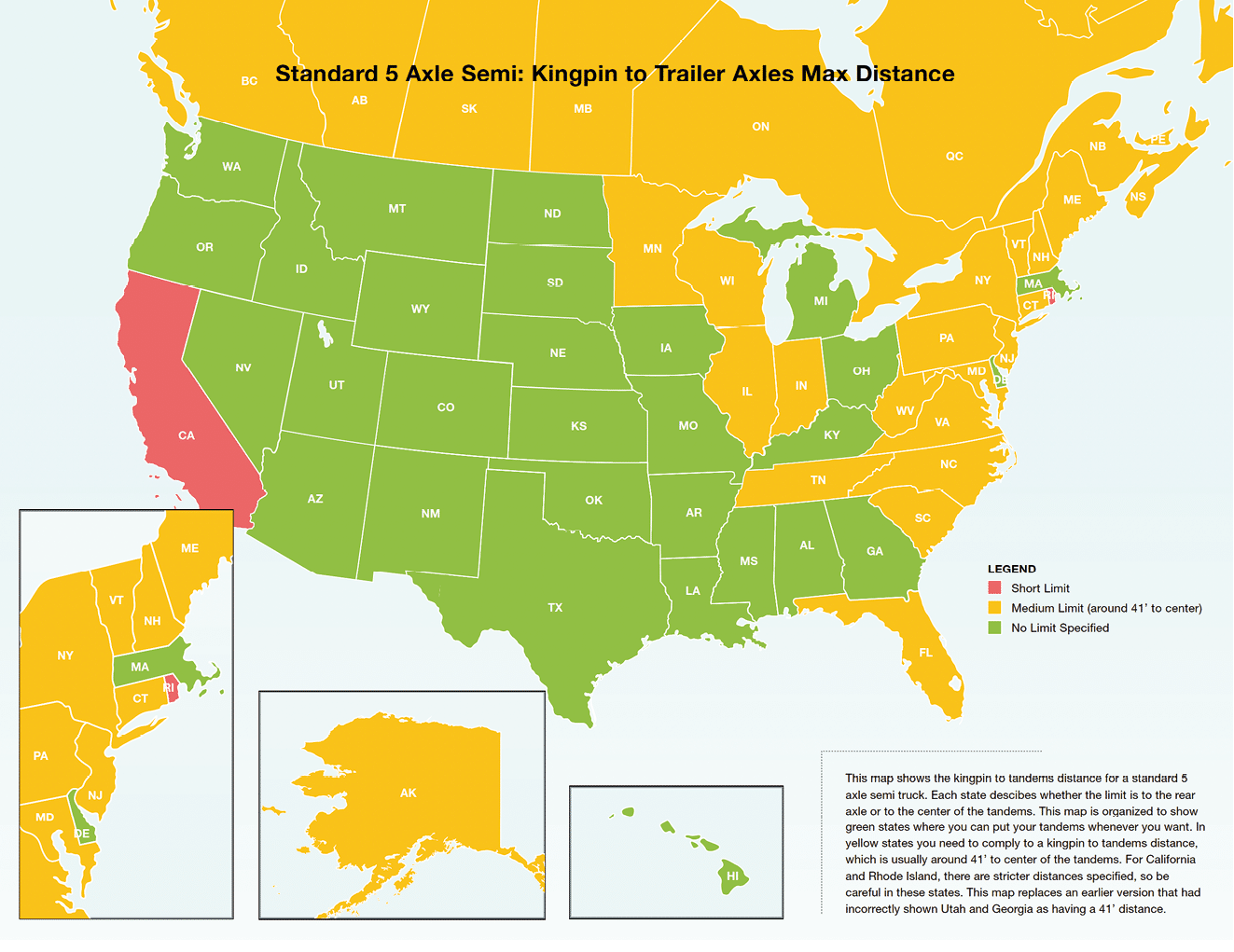
State Kingpin Regulations Summary
The kingpin to rear axle setting is a vehicle dimension some States use for governing the turning performance of tractor-trailer combinations. The two most common methods States use to measure this distance are shown below. When a load is picked up, determine what States you will pass through and slide the trailer tandems to the setting that satisfies the State with the most restrictive kingpin requirement. Use your Atlas, contact the appropriate state agency (D.O.T. or State HWY patrol), contact your dispatcher or other available resources for this information. Do this before you weigh the load.
As a Driver, you are responsible for knowing the proper kingpin setting for the states you are traveling through. Any tickets you receive for kingpin violations are your responsibility.
Tips:
- California and Rhode Island have the most restrictive kingpin setting requirements.
- 40 foot from kingpin to Center of Rear axle Group is the most common restriction.
Federal and State Weight Limits Summary
Most public roads in the United States are governed by regulations concerning oversize or overweight vehicles at both the federal and state levels and in many cases down to municipal levels to protect road and bridge infrastructure. Be aware and follow all signs to prevent this from happening.
Tons to Pounds Conversion
Ask Mentor to review the tons to pounds conversions below and then weight signs much your tractor weighs, how much an empty trailer weighs, cargo weight and gross weight. Many weight signs are posted in tons instead of pounds.

*Actual tractor, trailer, and cargo weights will vary. Weights above are for illustrative purposes.
Federal Weight Law Summary
Federal law governs the weight of vehicles allowed on the Interstate System.
- Single Axle = 20,000 pound maximum.
- Tandem Axle = 34,000 pound maximum.
- Gross (Tractor, Trailer, and Cargo) = 80,000 pound maximum.
The weight limits may be higher than those shown above in some instances because the Federal grandfather clause in Title 23 USC, 127 allows higher weight limits in some states. Use your Atlas, contact the appropriate state agency (D.O.T. or State HWY patrol), contact your dispatcher or other available resources for this information.
State Weight Law Summary
State law governs the weight of vehicles allowed on State Highways. Weight limits may vary between the State Highway System and the National Interstate System. Use your Atlas, contact the appropriate state agency (D.O.T. or State HWY patrol), contact your dispatcher or other available resources for this information.
- Steer Axle – State law varies considerably. They vary on both the weight total and the measurement system. Some use a fixed total and others use a measurement based on the width of the tire. On the lower end, North Dakota allows 550 pounds per inch of tire width. On the higher end, many States allow the Federal limit of up to 20,000 pounds on a single axle. In most scenarios, you can have up to 12,000 pounds on the steer axle but this should be confirmed during your pre-trip planning process.
- Single Axle = 20,000 to 24,000 pounds depending on the state.
- Tandem Axle = 34,000 to 44,000 pounds depending on the state.
- Gross (Tractor, Trailer, and Cargo) = 80,000 depending on the state.
Cab Card
Refer to your Cab Card in the permit book to see what is the maximum weight you can haul per state.
Equipment Weight Rating
Equipment must be rated for the amount of weight. A common steer tire rating on our equipment is 6,175 pounds which would allow 12,350 pounds on the steer axle. A common steer axle rating on our equipment is 12,500 pounds. In this scenario, a driver could have 12,350 pounds on his steer axle and operate on the Interstate System because the single axle is under 20,000 pounds and the equipment is rated for up to 12,350 pounds.
Diagram of Common Weight Distribution for 5 Axle Tractor-Trailer
In most scenarios you can have up tp 12,000 pounds on the steer axle, 34,000 pounds on the tractor drive axle and 34,000 pounds on the trailer tandems for both the Interstate System and State Highways but this should be confirmed during your pre-trip planning process for possible exceptions.
As a Driver, you are responsible for knowing the weight limits for the states you are traveling through. Any weight fines are your responsibility.
Scaling Loads
If applicable, adjust the trailer tandems to the most restrictive kingpin requirement setting for the States you will travel through. If you’re not going into California or Rhode Island, setting the trailer tandems at 40 feet from the “Kingpin to Center of Rear Axle Group” is generally a good starting point.
Always weigh before leaving where you picked up the load when possible. If scales are not available at the shipper, find the nearest CAT scale, even if it’s not in your planned direction of travel. If using a single pad scale, pull onto the scale and weigh each axle. Note each axle weight and add them together to get your gross weight. Note: If you get an overweight fine from a State after the Cat Scale showed you legal, Cat Scale will immediately check their scale. If their scale is wrong, they will reimburse you for the fine. If their scale is correct, a representative of Cat Scale Company will appear in court with you as a witness. (Verified from Cat Scale Website 1/16/2020).
If over 80,000 pounds STOP – YOUR LOAD IS OVERWEIGHT. Immediately call your Driver Manager.
If under 80,000 pounds, ensure each axle weight is under both the Federal and State limits for your route. Verify that your axle weights don’t exceed 12,000 pounds on steers, 34,000 pounds on tractor drive axles and 34,000 pounds on trailer tandems.
If overweight on an individual axle but under the 80,000 pounds gross weight limit:
a. If trailer tandems are overweight, slide trailer tandems towards the rear of the trailer to put more weight on the tractor.
b. If tractor tandems are overweight, slide trailer tandems towards the tractor to put more weight on the trailer tandems.
c. How many holes do I move the trailer tandems on the trailer slider rail? A general rule is that each hole equals 250 to 400 pounds of weight adjustment. The spacing between the trailer rail holes and how the trailer was loaded impact the actual amount.
The majority of our trailers have the slider rail holes 6 inches apart, see image to right, and will have approximately 350 to 400 pounds of weight adjustment per hole. Use 375 as your average.
d. Scale the load a second time. Recheck each axle weight.
e. If you are still overweight after scaling the second time, calculate the actual amount of weight adjustment per trailer slider rail hole using the following steps:
Subtract the axle weight from the 2nd scale weight from the 1 scale weight. This is the total weight adjustment you achieved the first time.
Divide the total weight adjustment by the number of holes you slid the trailer tandems. This is the actual weight adjustment per hole.
Divide the amount you are still overweight by the actual weight adjustment per hole and that will tell you how many additional holes you need to slide the trailer tandems.
Scale the load a third time to confirm you are legal.
Example: You scaled a load and have 11,500 pounds on the steer axle, 37,000 pounds on the tractor drive axles and 31,000 pounds on the trailer tandems for a total gross weight of 79,500 pounds. You are overweight by 3,000 pounds on your tractor drive tires.
a. 3,000 pounds divided by 375-pound average per hole = 8 holes
b. Move trailer tandems 8 holes towards tractor.
c. Scale the load a second time. This time you have 34,500 pounds on the tractor drive axles and 33,500 pounds on the trailer tandems. You are still 500 pounds overweight on your tractor-drive axles.
37,000 pounds minus 34,500 pounds = 2,500 pounds which equals your total weight adjustment from moving the trailer tandems the first time.
2,500 pounds divided by 8 holes = 312.5 pounds per hole which equals your actual weight adjustment per trailer slide rail hole from moving the trailer tandems the first time.
You are still overweight by 500 pounds, 500 lbs / 312.5 lbs per hole = 1.6 holes.
Round up and slide the trailer tandems another 2 holes towards the tractor.
Scale the load a third time to confirm you are legal.
If you are under 80,000 pounds but can’t get each of your axles under the required weight by sliding the trailer tandems, you may use the tractor fifth wheel slider to move weight between the steer axle and drive axle when applicable. This will move approximately 300 pounds per hole. Move the fifth wheel in the direction you want the weight moved. If you need to put more weight on the steer axle, slide the fifth wheel towards the steer tires. If you need to put more weight on the drive axle, slide the fifth wheel towards the trailer.
a. Position tractor and trailer in a straight line.
b. Then lower landing gear on the trailer until firmly on the ground.
c. Release 5th wheel locking pins.
d. Gently move the tractor forward or back to reposition the 5th wheel as needed, count or mark your target hole before moving. Make very small moves and check position frequently.
e. Engage 5th wheel lock and raise the landing gear.
Tips:
Diesel weighs about 7 pounds per gallon, most of our trucks can carry 200 gallons which weighs 1,400 pounds. DEF weighs 9 pounds per gallon and the trucks carry approximately 23 gallons which weigh 207 pounds. Factor your fuel levels into your trip planning on heavy loads based on customer requirements. – — How the freight is loaded and positioned in the trailer impacts weight distribution on the individual axels.
Sliding Tandems
Trailer:
Slide trailer tandems to redistribute weight between trailer tandems and tractor drives as necessary.
Approximately 250 pounds to 400 pounds per hole.
Determine the direction and hole that you need to move to and mark it. Tip: You can also place a glove on the ground next to the driver’s door for a general reference of how far you’ve moved. Get out and check the position frequently.
Position tractor and trailer in a straight line.
Set tractor and trailer brakes.
Pull up and out on trailer tandem release handle and lock in place. Verify that all four pins are released by checking that they have retracted through the frame. If there is pressure on the pins you might have to rock the unit back and forth to get them to retract so you can slide the tandems. You may also have to hit stuck pins with a hammer.
Release tractor breaks only.
Slowly move the trailer to the desired hole.
Check the position of the tandems to ensure they are where they need to be. If not, move and recheck as needed. Once OK, move the tandem release handle out of the locked position to engage the springs.
Move the tractor either forward or back and confirm ALL 4 PINS engage through the frame. They are spring-loaded and will push through once lined up with the frame holes. Caution: Not doing this step correctly can result in equipment damage.
Weight Distribution
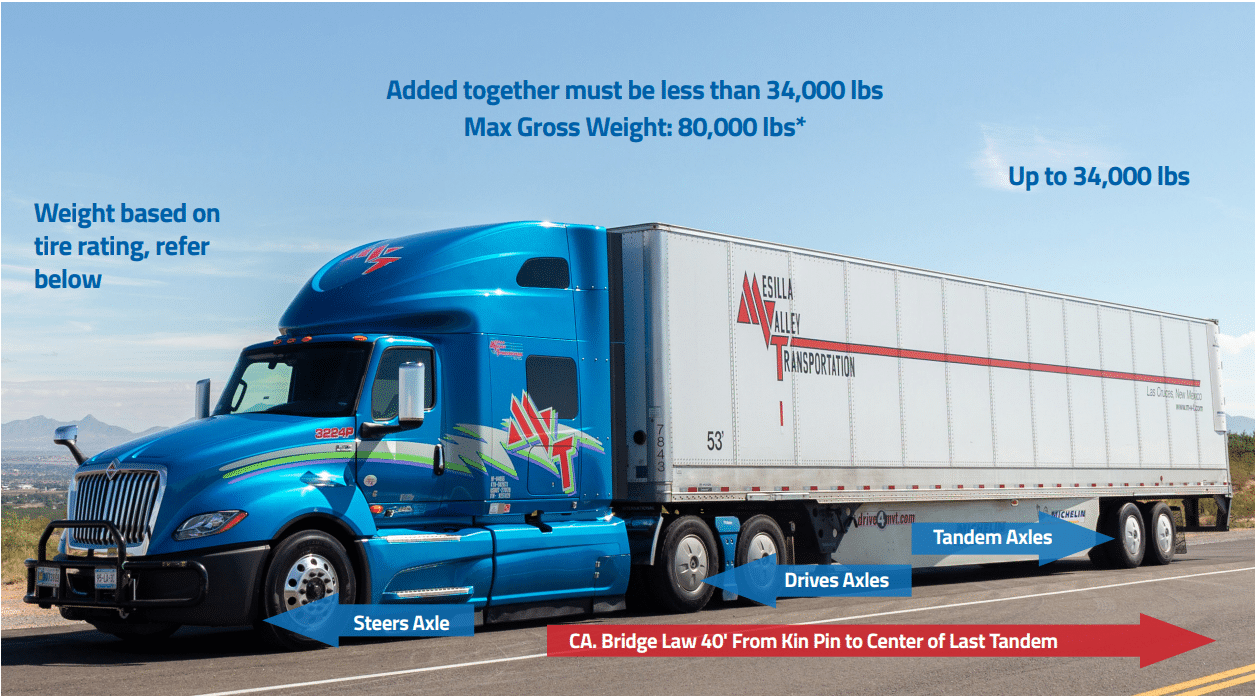
By sliding the trailer tandems forward, you will put more weight on the trailer tandems and take weight off the tractor’s drive axles. Conversely, by sliding the trailer tandems toward the rear of the trailer, you will take weight off the trailer tandems and put more weight onto the tractor’s drive axles.
There are a few exceptions and ways to adjust so the weights are legal:
APU Exemption 350-400 lbs. on the steer and drive axels. It varies by state.
** Can go over 80,000 if the state has the exemption, refer to the exemption in the information packet.
Steer Tires: if mixed in rating you must go by the lesser rated tire.
- LRG: 6,175 x 2 = 12,350
- LRH: 7,160 x 2 = 14,320
Adjust tandems accordingly.
- Check locking pins
- Each hole = Most trailers have 4 inches or 6 inches spacing so you can estimate that weight will shift 250 lbs. for 4 inches spacing and about 300 lbs. for 6 inches.

Guide on Kingpin to Tandem Measures
How to Slide Your Tandems
Which Way to Slide Your Tandems
A common task for truck drivers is to slide the tandem axle group along the trailer to adjust the weight on different axle groups. Knowing which way to move the axles can be confusing.
The tandem axle groups on most trailers can be moved forward and backward along the length of the trailer. Truck drivers want to be able to put the axles where the weight is best distributed, but there are regulations that vary by state and province regarding how far back the trailer tandems can be moved. This is called the trailer wheelbase or kingpin to rear axle/tandems distance and refers to the distance between the kingpin on the trailer and the axle group.
What Does it Matter?
Governments set rules on where to set the tandems to keep the wheelbase of the truck-trailer combination smaller. The longer the trailer wheelbase, the less maneuverable the truck-trailer combination, and the more curbs the truck will run over.
Truck drivers want to be able to set their wheelbases where ever they want. If there is a load that is not distributed evenly in the trailer, the truck axles can be overweight, even though the entire truck is not overweight. In this case, the tandems should be
‘pushed forward’ so more weight would be put on the trailer axles.
Let’s see how this works in practice
Scenario 1:
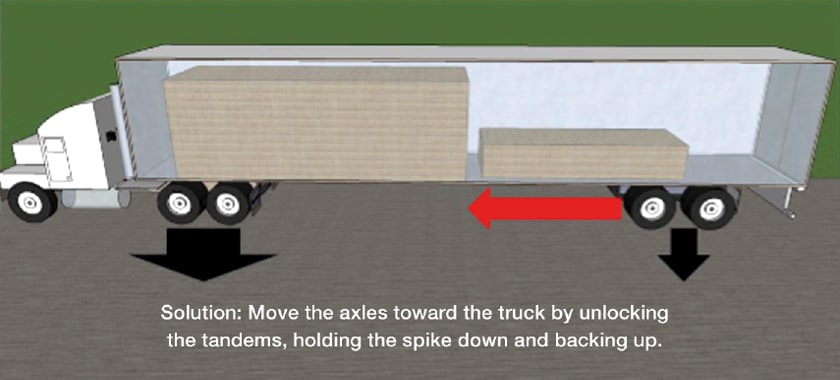
Scenario 2:
Also, it is possible that there is too much weight on the trailer axles. In this case, the axles can be moved backwards to move weight from the trailer to the truck.
Caution!
There are rules governing how far back tandems can be placed. Please review the information on the following pages to see the minimum and maximum KPRA distances.
How far should you move the axles?
A good rule of thumb is that one hole on the trailer equals 250 – 300 lbs being moved from the truck to trailer, or vice versa.
Kingpin to Tandems Minimum Distances
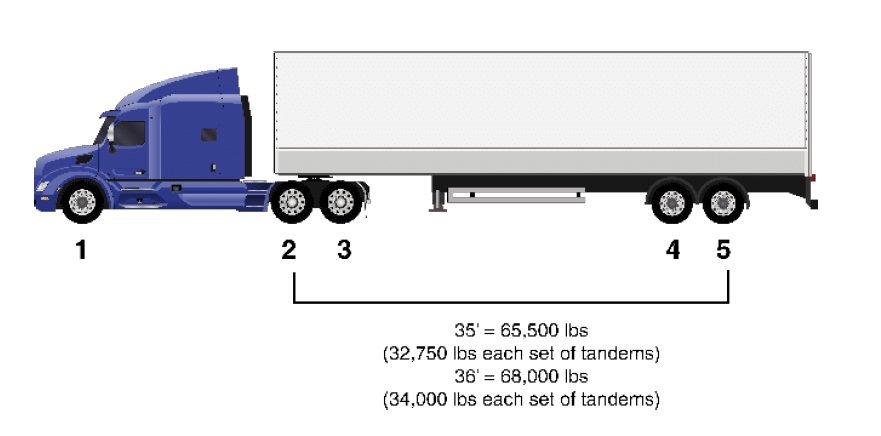
1. Bridge laws reduce the weight you can carry
The bridge law reduces the amount of weight that can be placed on axles as you move them together.
To avoid having this weight reduction, keep the distance between axles 2 and 5 at least 36 feet apart.
Where does this apply?
• Canada
• Maine
• Maryland
• New Jersey
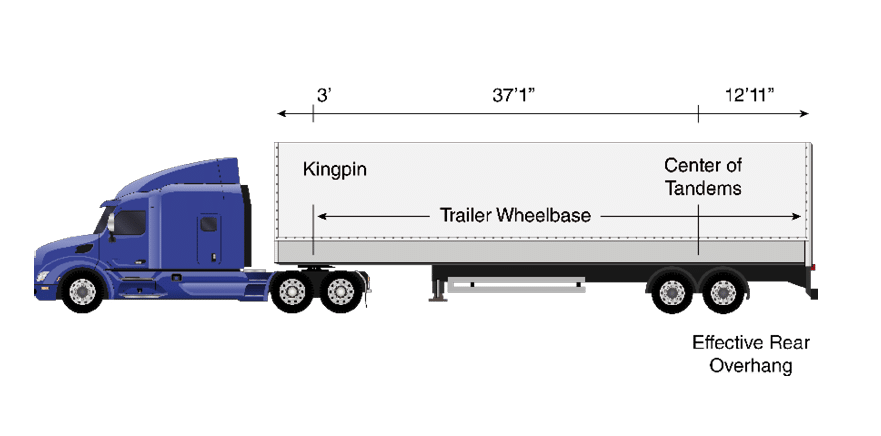
2. Rear effective overhang
Some jurisdictions restrict trucks to have a rear overhang that is “35% of the trailer wheelbase.” In these states there cannot be a very short distance between the kingpin and the tandems, and then a long distance from the tandems to the end of the trailer. A typical 53’ van trailer has a 3’ kingpin setback. In this instance, the minimum kingpin to center of the trailer tandems cannot be less than 37’ 1”.
Kingpin to Tandems Maximum Distances
October 2020
| Jurisdiction – To Center of Axles or Rear Axle | Minimum | Maximum |
|---|---|---|
| Alabama – Kingpin to Center of Axles | 41′ Max – Applies to trailers between 53′ 6″ – 57′ | |
| Alaska – Kingpin to Center of Axles | 41′ 0″ | |
| Alberta – Kingpin to Center of Axles | 20′ 6″ | 41′ 0″ |
| Arizona | None Specified | |
| Arkansas | None Specified | |
| Atlantic Provinces / Canada – Kingpin to Center of Axles | 20′ 6″ | 41′ 0″ |
| British Columbia – Kingpin to Center of Axles | 20′ 6″ | 41′ 0″ |
| California – Kingpin to Center of Rear Axle | California STAA Routes – Blue and Green: 40′ 0″ Max – No KPRA Limit if trailer is less than 48″ California Black Routes: 40′ 0″ Max – (Applies regardless of trailer length) |
|
| Colorado | None Specified | |
| Connecticut – Kingpin to Center of Rear Axle | 43′ Max – Applies to trailers between 48′ – 53′ | |
| Delaware | None Specified | |
| Florida – Kingpin to Center of Axles | 41′ 0″ | |
Kingpin to Tandems Maximum Distances (Continued)
Revised May 2024
| Jurisdiction – To Center of Axles or Rear Axle | Minimum | Maximum |
|---|---|---|
| Georgia | None Specified | |
| Hawaii | None Specified | |
| Idaho | None Specified | |
| Illinois – Kingpin to Center of Rear Axles | 45′ 6″ | |
| Indiana – Kingpin to Center of Rear Axles | 43′ 0″ Max – Applies to trailers between 48′ – 53′ | |
| Iowa | None Specified | |
| Kansas | None Specified | |
| Kentucky | None Specified | |
| Louisiana | None Specified | |
| Maine – Kingpin to Center of Axles | 45′ 6″ | |
| Manitoba – Kingpin to Center of Axles | 20′ 6″ | 41′ 0″ |
| Maryland – Kingpin to Center of Axles | 41′ 0″ Max – Applies to trailers between 48′ – 53′ | |
| Massachusetts | None Specified | |
| Michigan | None Specified | |
Kingpin to Tandems Maximum Distances (Continued)
Revised May 2024
| Jurisdiction – To Center of Axles or Rear Axle | Minimum | Maximum |
|---|---|---|
| Minnesota – Kingpin to Center of Axles | 43′ 0″ | |
| Mississippi | None Specified | |
| Missouri | None Specified | |
| Montana | None Specified | |
| Nebraska | None Specified | |
| Nevada | No Limit | |
| New Hampshire – Kingpin to Center of Axles | 41′ 0″ | |
| New Jersey – Kingpin to Center of Rear Axle | 41′ 0″ | |
| New Mexico | None Specified | |
| New York – Kingpin to Center of Rear Axle | 43′ 0″ | |
| North Carolina – Kingpin to Center of Axles | 41′ 0″ | |
| North Dakota | None Specified | |
| Ohio | None Specified | |
| Oklahoma | None Specified | |
| Ontario – Kingpin to Center of Axles | 20′ 6″ | 41′ 0″ |
| Oregon | None Specified | |
| Pennsylvania – Kingpin to Center of Rear Axle | 41′ 0″ | |
Kingpin to Tandems Maximum Distances (Continued)
Revised May 2024
| Jurisdiction – To Center of Axles or Rear Axle | Minimum | Maximum |
|---|---|---|
| Quebec – Kingpin to Center of Axles | 20′ 6″ | 41′ 0″ |
| Rhode Island – Kingpin to Center of Rear Axles | 41′ 0″ | |
| Saskatchewan – Kingpin to Center of Axles | 20′ 6″ | 41′ 0″ |
| South Carolina – Kingpin to Center of Axles | 41′ 0″ | |
| South Dakota | None Specified | |
| Tennessee – Kingpin to Center of Axles | 41′ 0″ Max – Applies to trailers between 48′ – 53′ | |
| Texas | None Specified | |
| Utah | None Specified | |
| Vermont – Kingpin to Center of Axles | 41′ 0″ | |
| Virginia – Kingpin to Center of Axles | 41′ 0″ | |
| Washington | None Specified | |
| West Virginia – Kingpin to Center of Axles | 41′ 0″ Max – Actual specification is 37′ from rear tractor axle to first axle of trailer | |
| Wisconsin – Kingpin to Center of Axles | 43′ 0″ | |
| Wyoming | None Specified | |
Securing Cargo
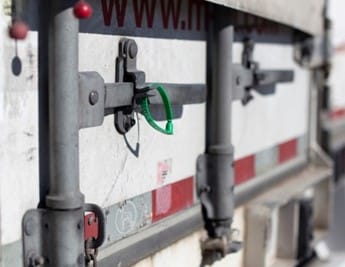
As per company policy, all trailers must have a lock on them. This is especially important when drivers are assigned to a high value load. Don’t be held liable or hold the company liable for things that can be prevented.

Vehicle Inspections
Pre-Trip Inspections
Pre-trip inspections need to be performed each time your truck has been sitting for an extended period. Other common instances to do a pre-trip inspection are:
- When starting to drive after your 10-hour break.
- After finishing a 34-hour reset.
- When coming back to work from home time.
- When being assigned a new truck.
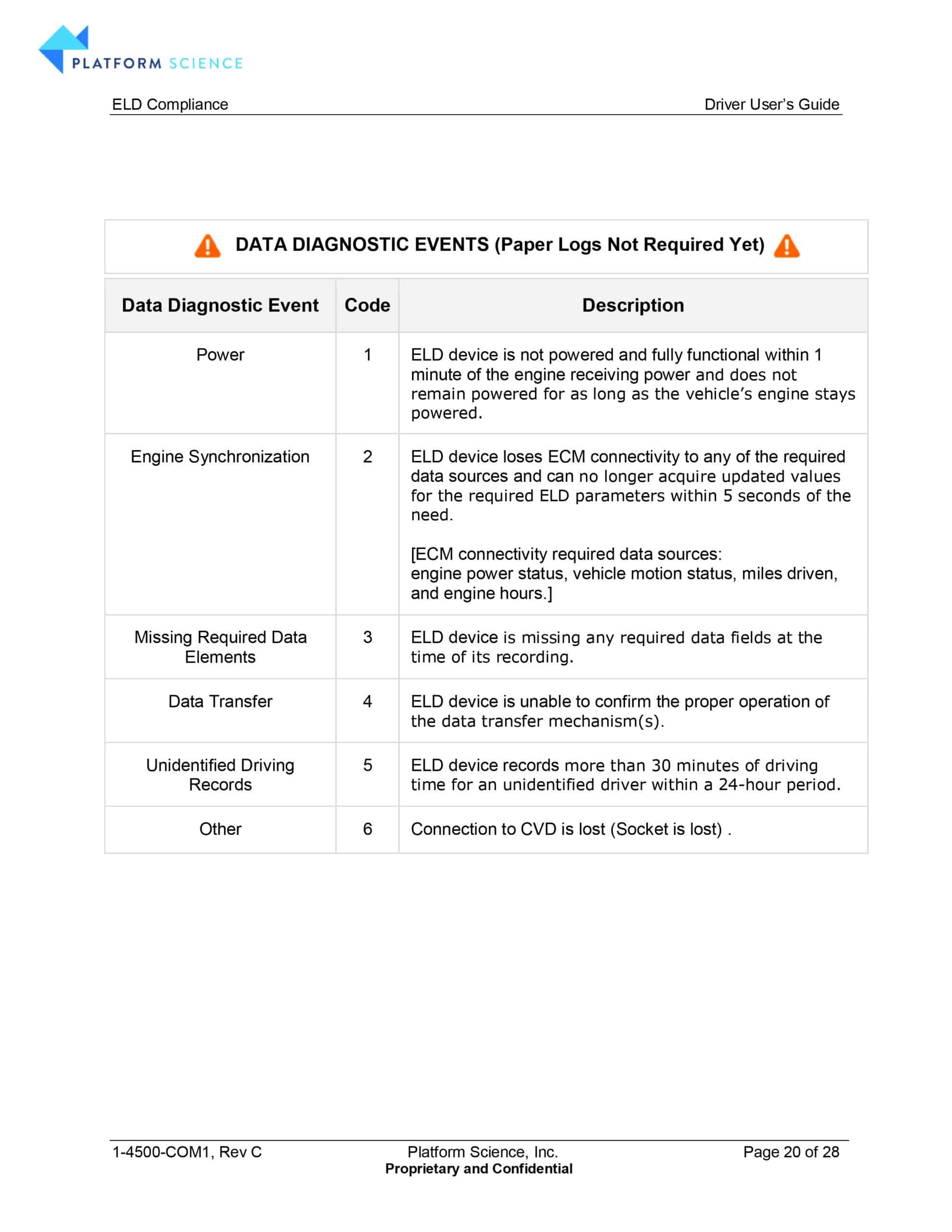
Pre-Trip Inspections on Mobile Communication/ELD Device
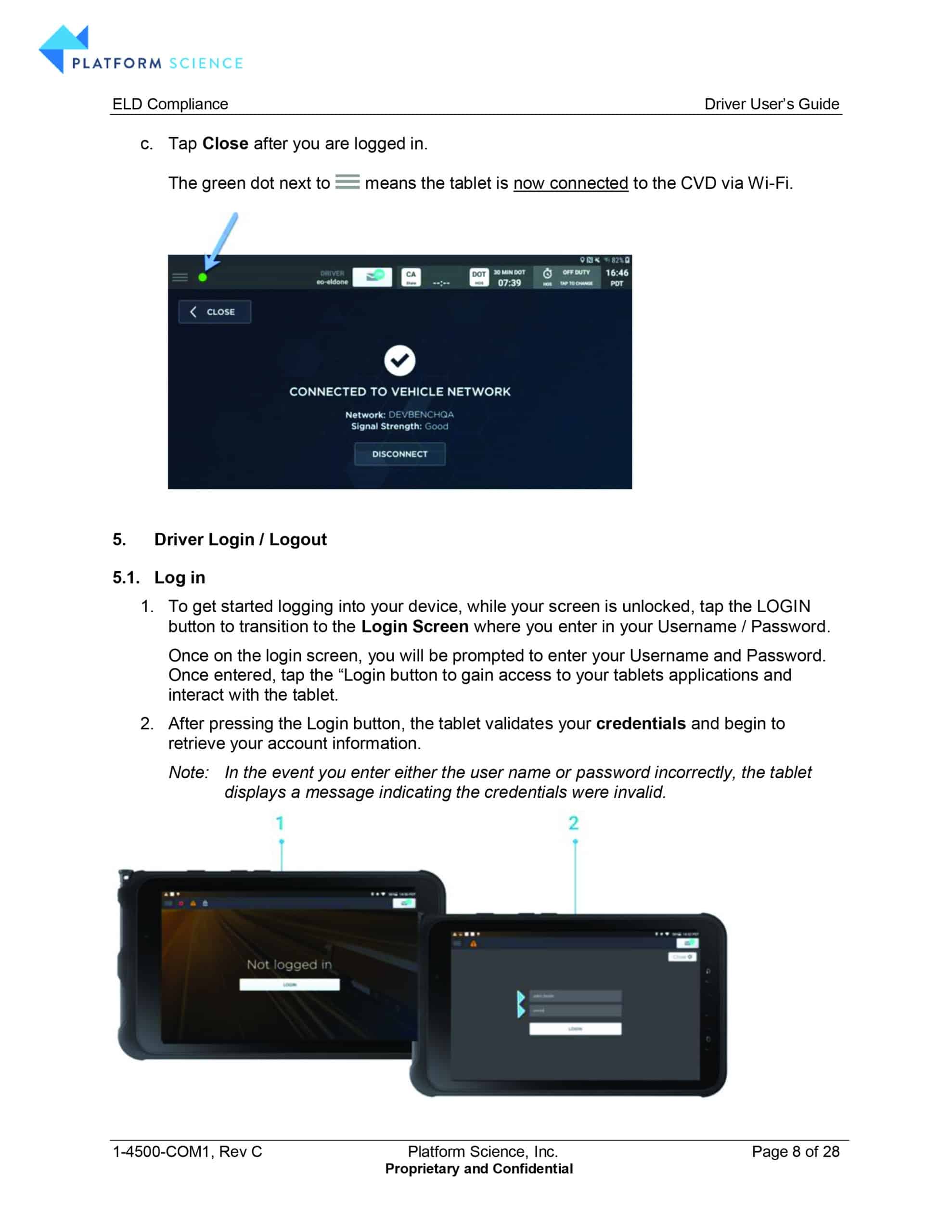
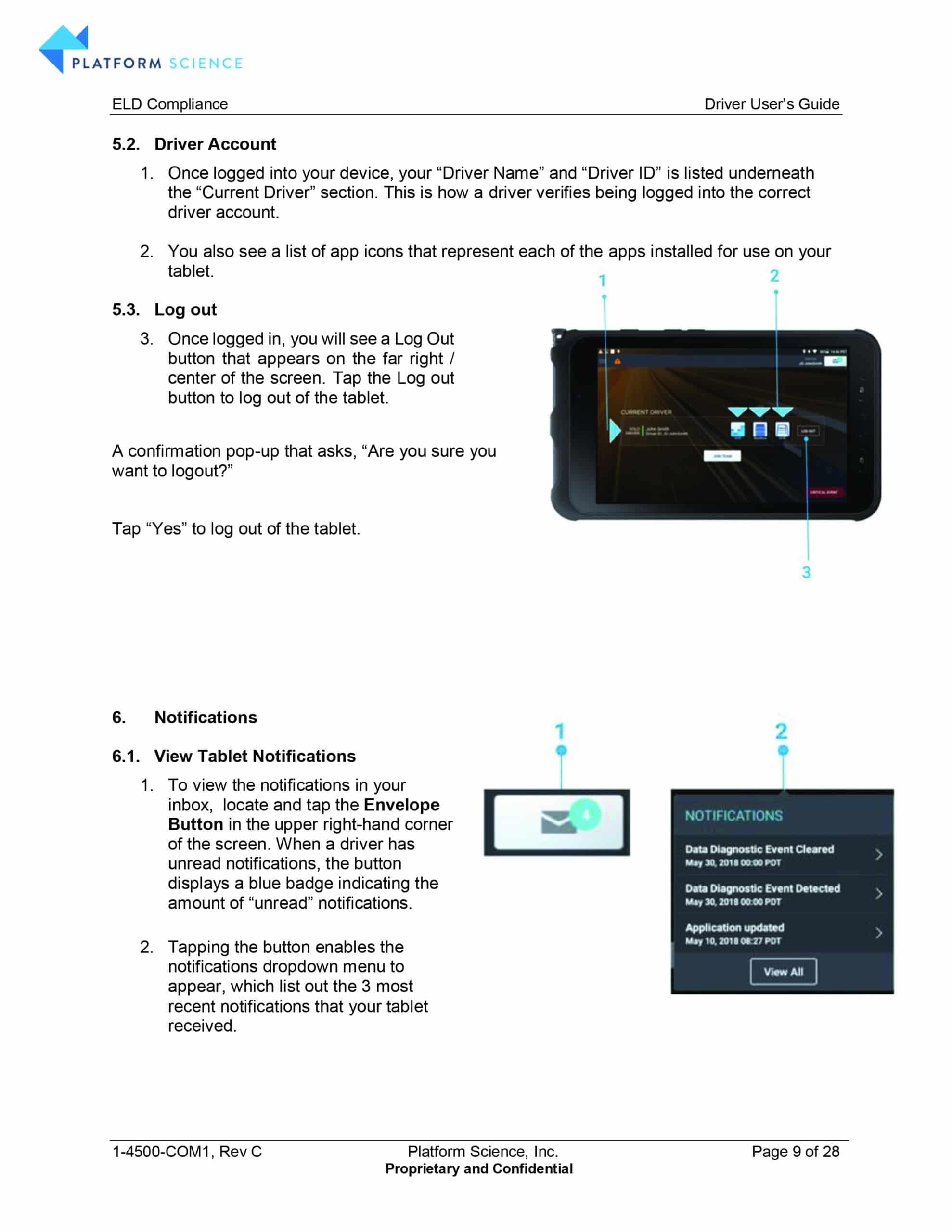
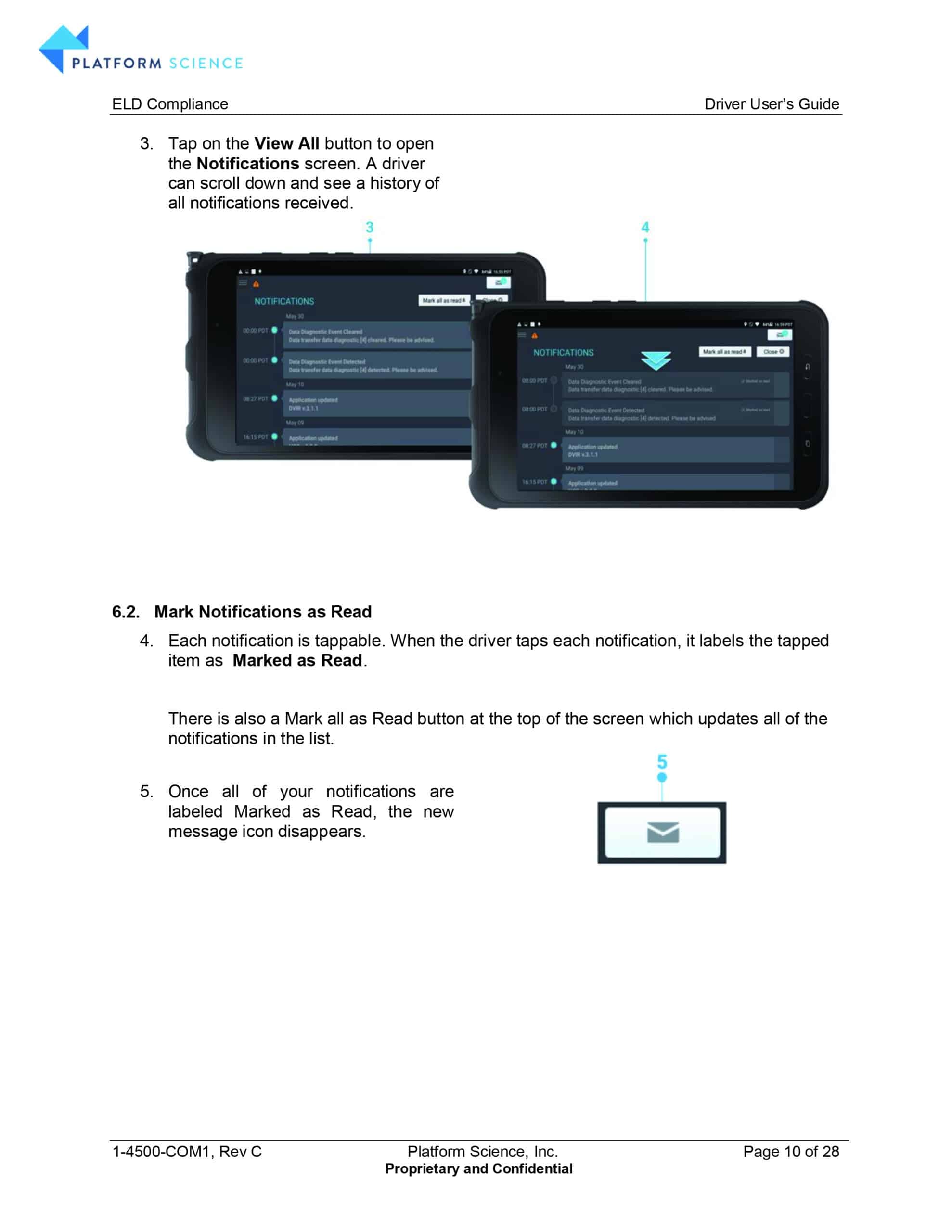
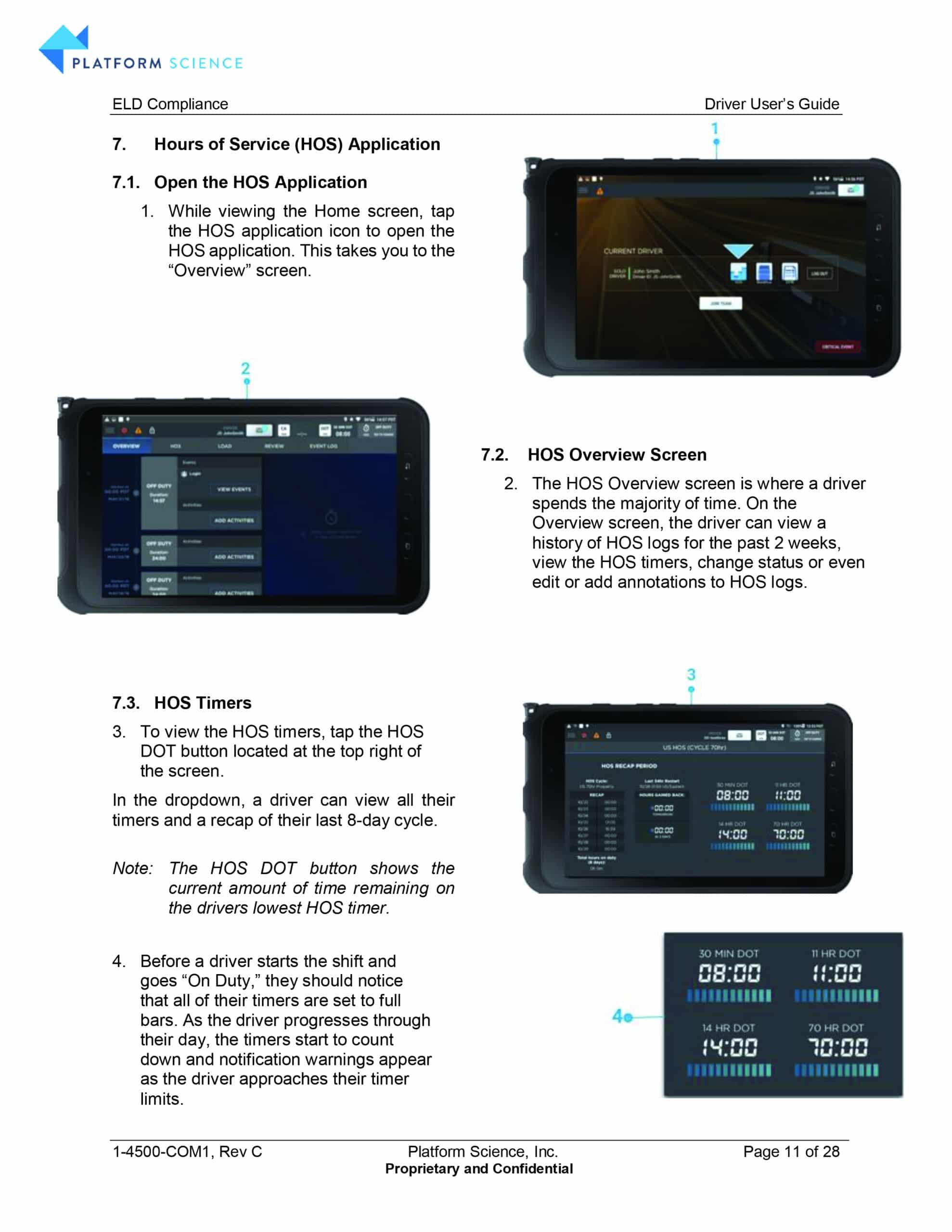
Make sure to log any pre-trip inspections using your electronic logs on the Mobile Communication/ELD Device found in each truck. Select the DVIR” Option on the home screen of the Mobile Communication/ELD Device to begin the pre-trip inspection.
Paperwork Inspection:
Paperwork must be verified so that all licenses and registrations are up to date and follow Federal and State laws.
Paperwork and licenses that need to be checked include:
- All permits in the tractor permit book have not expired.
- The vehicle identification number (VIN) plates, and the license plate are visible and damage-free.
- Make sure that the registration of the tractor and trailer are up to date and have not expired.
- Check the inspection sticker of the tractor and the trailer, including the IFTA sticker located on the tractor.
- Make sure that the paperwork matches the vehicle you are inspecting. Paperwork can get mixed up and may not match the vehicle you are inspecting.
If you feel there is anything wrong with the paperwork, you have found paperwork that is expired, missing, or any items on the outside of the trailer are damaged, please call the Safety Department IMMEDIATELY. They will give drivers directions on the proper steps to take and what information to gather. Paperwork that is expired or does not match will cause the load to be delayed and can result in a driver being late on their delivery, which, in the end, may result in a service failure.
Inspections
Proper items should be checked on all sides of the tractor and trailer to ensure these vehicle parts are functioning properly. Any of the items listed below may cause problems for the driver if not properly addressed during a pre-trip inspection. Some may even cause the driver to be out of compliance with Federal or State laws.
Items that need to be inspected for proper function include:
- The towbar or the saddle-mount connections are properly secured to the trailer and tractor.
- The saddle-mount connections function without any cramping or binding.
- Open the hood of the tractor and check for leaks.
- Check the ground around the vehicle to make sure there are not fluids that are leaking.
- Make sure all fluids are topped off.
- Check to make sure you have extra fuses in your tractor.
- Check that you are carrying snow chains with you during winter months, especially for the states that require snow chains be present on the truck always during the winter months.
- Make sure headlights are functioning, including the low and high beams.
- Walk around the vehicle to make sure all signal lights and brake lights function properly.
- Check to make sure windshield wipers function properly.
- Check to verify both the air horn and the city horn are working.
- Check that the locking jaws are fully enclosed around the trailer’s kingpin.
- Check that all tires are free from cracks, bubbles, or corrosion.
- Make sure that the trailer tandems are locked in place.
- Check the undercarriage of the trailer to make sure there are no obstructions.
Make sure to check all areas of the vehicle to ensure that every part is working the way that it should work. This can lessen issues that can arise down the road.
Examples of Items to Be Checked
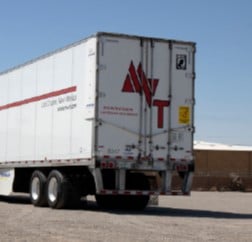
Trailer registration can be found in the plastic holder on the front of the trailer. Please verify that it matches the trailer (VIN) and it is up to date.

Please make sure all stickers are current including the registration and International Fuel Tax Agreement sticker.
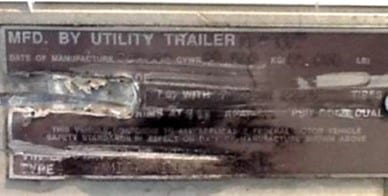
This is an example of a damaged VIN plate. Please contact the Safety Department immediately if a VIN plate is found in this condition or if it is missing. Provide images of the unit as well.

Check all saddle-mount connections are properly secured and make sure they operate without crumpling or binding.
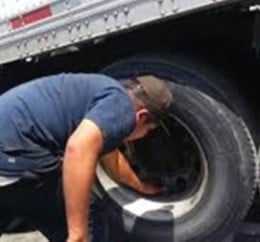
Inspect all tires for bubbles and cracks. Inspect the inside and the outside of the wheel to identify any other potential issues.
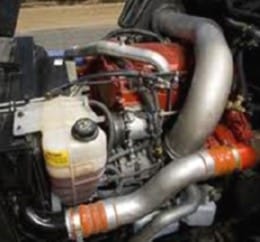
Open the hood of the truck and check hoses and connections for any leaks and if there are fluids dripping on the ground. Also, be aware that fluids should be topped off to avoid receiving a citation.
Example of Checklist to Inspect the Vehicle
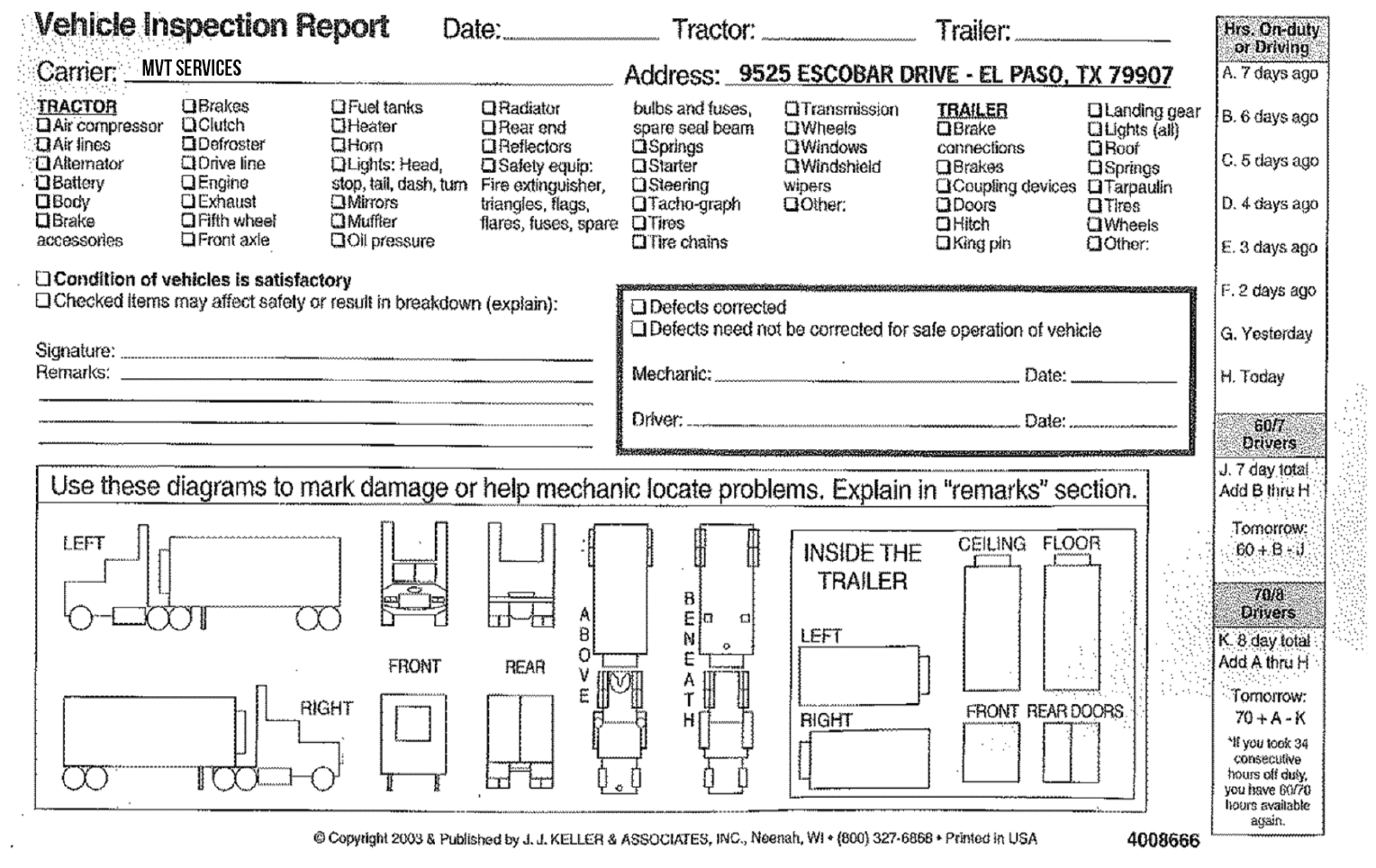
Use this checklist as an example of how to inspect all sides of the vehicle. Make sure to check each area thoroughly to avoid missing any important areas.
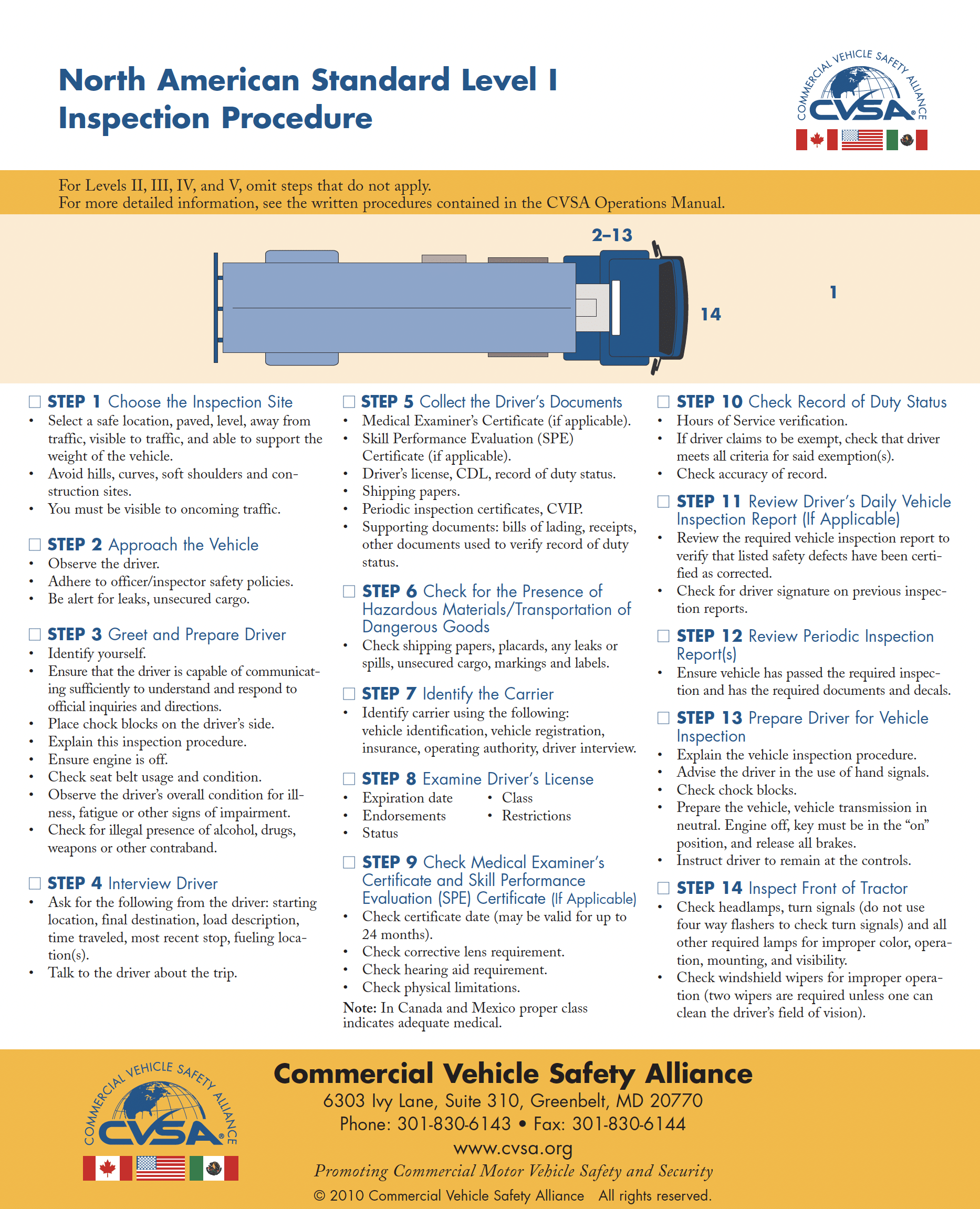
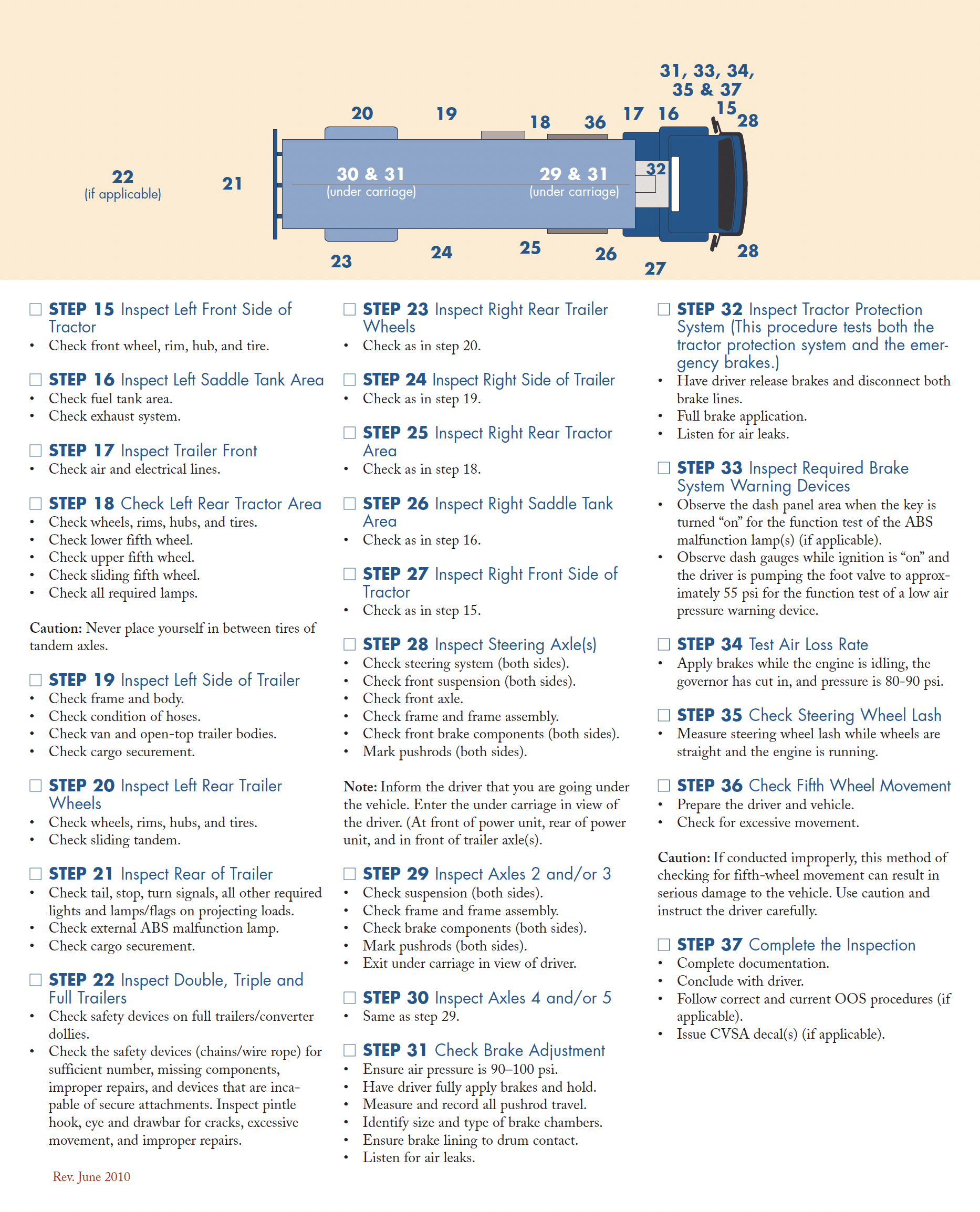
Safety Compliance
The safety of our team members, customers and the public is our top value at MVT. From the beginning of Company policies in the Driver Handbook. Student should understand that “Safety is an Attitude” and how “Values during the daily workflow. Emphasize always being compliant with all D.O.T. regulations. Please note and refer to your Student’s training discuss the importance of safety and practice applying safe techniques and procedures Impact Safe Behaviors.”
HOURS OF SERVICE (HOS)
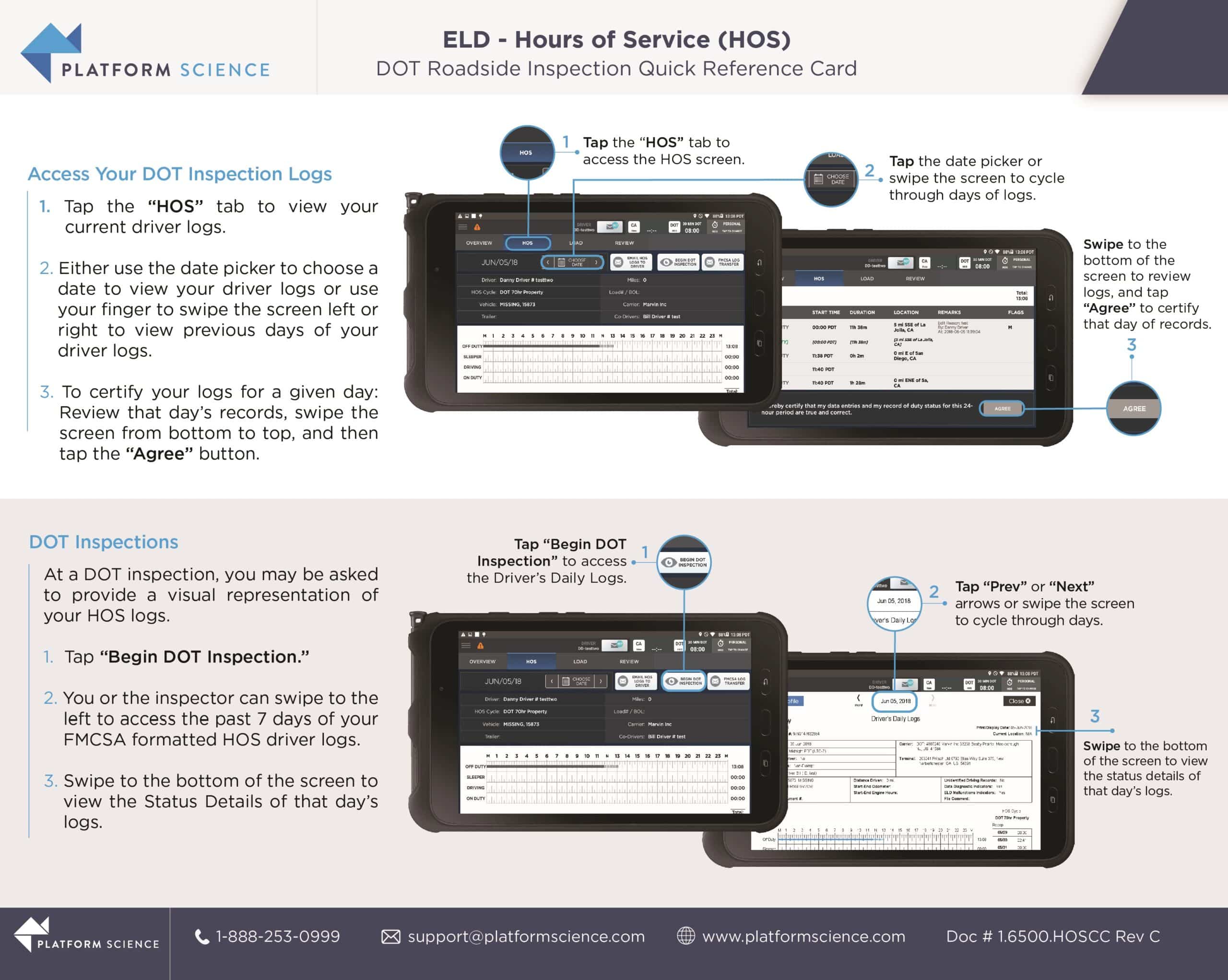
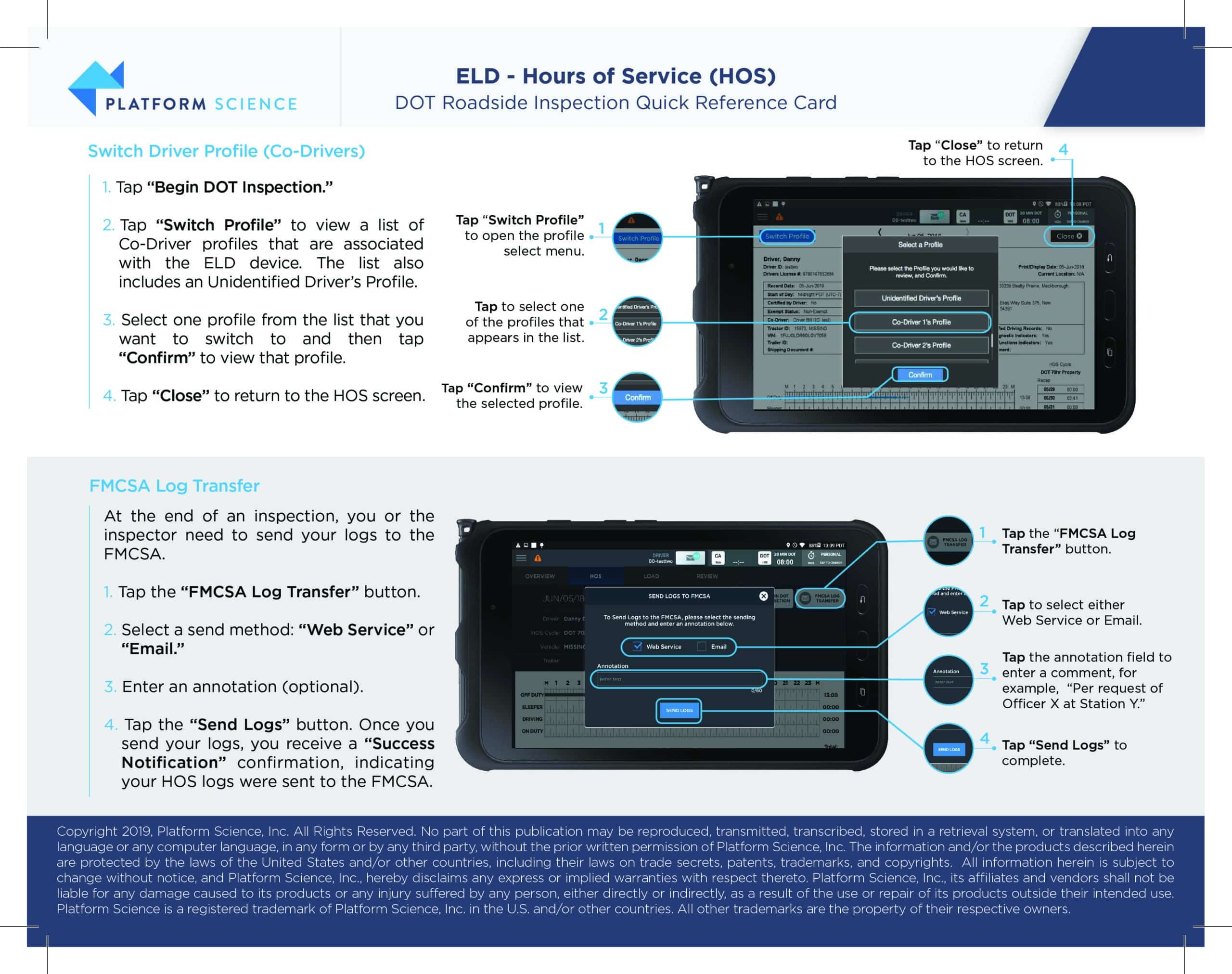
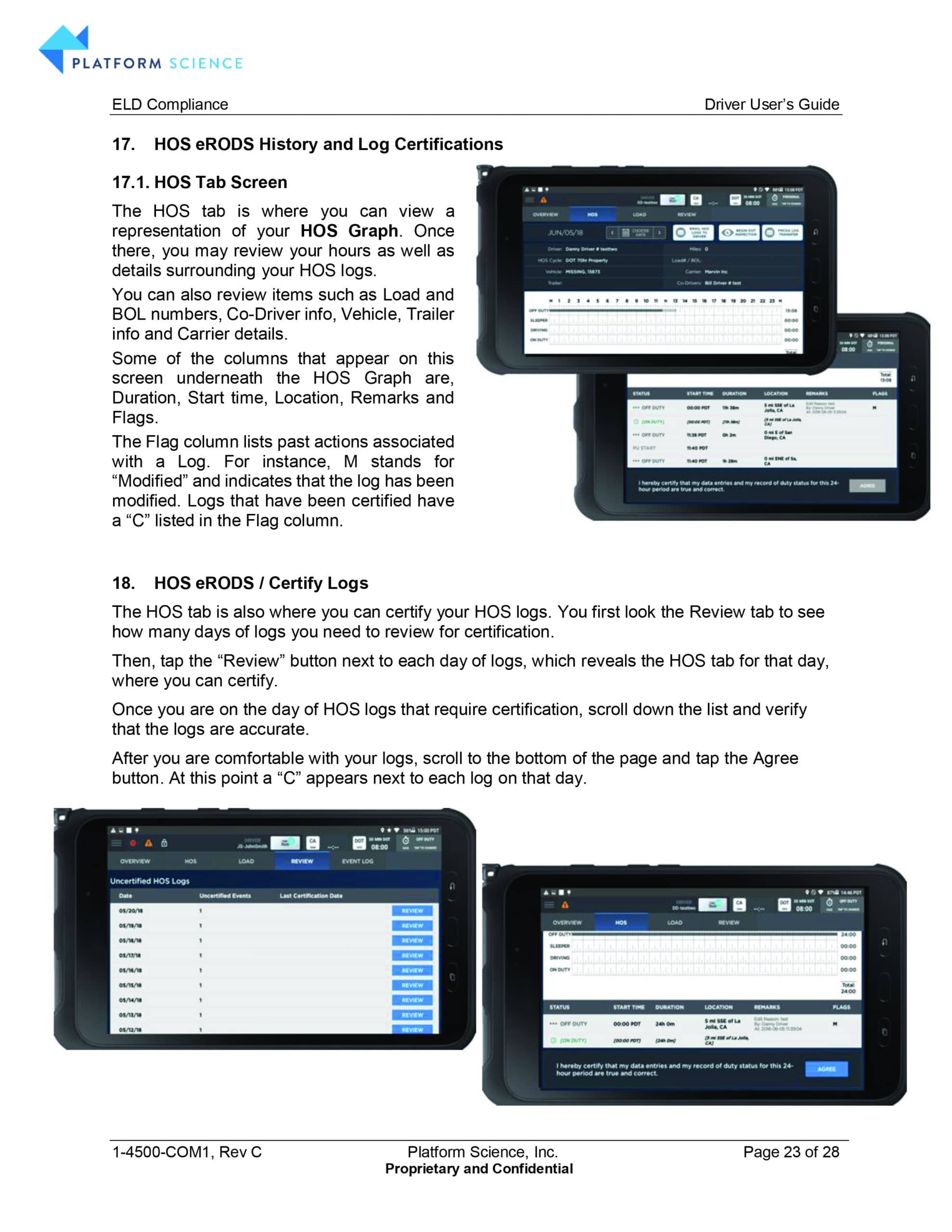
Review the proper procedures and techniques required to use the electronic logging device (ELD) to comply with HOS regulations.
Student Skills Objectives:
- Be able to utilize ELD device to record duty status.
- Be able to utilize paper logs as a secondary process for backup purposes.
Student Knowledge Objectives:
- 11 Hour Rule – May drive a maximum of 11 hours after 10 consecutive hours off duty within a 14 h period.
- 14 Hour Rule -May not drive beyond the 14th consecutive hour after coming on duty, following 10 consecutive hours off duty. Off-duty time does not extend the 14-hour period.
- 70 Hour Rule – May not drive after 70 hours on duty in 8 consecutive days.
- 34 Hour Break – A driver may restart an 8 day period after taking 34 or more consecutive hours off duty. 30 Minute Rest Break – May drive only if 8 hours or less have passed since the end of driver’s last off-duty or sleeper berth period of at least 30 minutes.
- On-Duty Functions:
-
-
- All time at a plant, terminal, facility, or other property of a motor carrier or shipper waiting to be dispatched (unless the driver has been relieved from duty by the motor carrier).
- All time inspecting, servicing or conditioning any CMV at any time.
- All driving time.
- All time in a CMV other than resting.
- All time unloading or loading a CMV (remaining in readiness to operate the CMV or in giving or receiving receipts for shipments loaded or unloaded).
- All time repairing, obtaining assistance or remaining in attendance upon a disabled CMV.
- All time spent providing breath samples or urine specimens including travel time to and from the collection site.
-
Performing any work for the motor carrier.
-
Performing any compensated work for a person who is not a motor carrier.
-
Ensure the trailer number(s) and order numbers(s) are recorded on the log.
-
Utilize paper logs if ELD system does not function.
-
How to access Geotab User Manual. From Driver Hub main screen, select the “More” menu, then Media Library, then Telematics.
-
-
EXAMPLE 1 - 14-HOUR “DRIVING WINDOW”
Driver’s Available 14-Hour Period
Violations: There are no violations.
Explanation: This is an example of the 14 consecutive-hour “driving window.” After 10 consecutive hours off duty on the prior day, the driver had 14 hours available and started his/her “driving window” at Midnight on Day 1 (CP#1). At 2:00 p.m., the driver had reached the end of the 14-hour “driving window” (10 hours driving: 3 hours on duty; 1 hour off duty). The driver may not drive a commercial motor vehicle (CMV) once he or she has reached the end of the 14 consecutive-hour period, and in this example the driver goes off duty for the required 10 consecutive hours starting at 2:00 p.m. on Day 1.
EXAMPLE 2 - 10 CONSECUTIVE HOUR OFF-DUTY BREAK
Use of Sleeper-Berth in 10 Consecutive Hour Break
Violations: There are no violations.
Explanation: This is an example of the 10 consecutive hour off-duty period. After 10 consecutive hours off duty on Day 1 starting at 10:00 a.m. (CP#1), the driver was on duty for 1 hour, drove for 5 hours, off duty for 1 hour, and drove for another 5 hours. While not having used all available hours in the 14-hour “driving window” at this point, the driver decides to take his/her 10 consecutive hour break. The driver goes off duty for 1 hour, followed by 8 hours in the sleeper-berth (S/B), followed by 1 more hour off duty. This constitutes a legal 10 consecutive hour break, and at 8:00 a.m. on Day 2 (CP#2), he/she has 11 hours of driving and 14 on-duty hours available.
EXAMPLE 3 DRIVING LIMIT
11 Hours Driving Within 14-Hour “Driving Window”
Violations: There are no violations.
Explanation: This is an example of the maximum of 11 hours of driving within the 14-hour “driving window.” After 10 consecutive hours off duty, the driver had 14 hours available (and 11 hours driving) starting at 10:00 a.m. on Day 1 (CP#1). The driver was on duty for 1 hour, drove for 5 hours, went off duty for 1 hour, drove for another 6 hours between 5:00 p.m. and 11:00 p.m., and was on duty for 1 hour. The driver drove the maximum 11 hours within the 14-hour “driving window” and is therefore in compliance with the rule. Starting at Midnight on Day 2, the driver may not drive a CMV until he/she goes off duty for a minimum of 10 consecutive hours, which is indicated on the log (10 S/B hours). In addition, the 1 hour (1/2 hour minimum) off-duty break between 4:00 p.m. and 5:00 p.m. on Day 1 is necessary as the driver may drive only if 8 hours or less have passed since the end of the driver’s last off-duty period of at least 30 minutes.
EXAMPLE 3 DRIVING LIMIT
11 Hours Driving Within 14-Hour “Driving Window”
Violations: There are no violations.
Explanation: This is an example of the maximum of 11 hours of driving within the 14-hour “driving window.” After 10 consecutive hours off duty, the driver had 14 hours available (and 11 hours driving) starting at 10:00 a.m. on Day 1 (CP#1). The driver was on duty for 1 hour, drove for 5 hours, went off duty for 1 hour, drove for another 6 hours between 5:00 p.m. and 11:00 p.m., and was on duty for 1 hour. The driver drove the maximum 11 hours within the 14-hour “driving window” and is therefore in compliance with the rule. Starting at Midnight on Day 2, the driver may not drive a CMV until he/she goes off duty for a minimum of 10 consecutive hours, which is indicated on the log (10 S/B hours). In addition, the 1 hour (1/2 hour minimum) off-duty break between 4:00 p.m. and 5:00 p.m. on Day 1 is necessary as the driver may drive only if 8 hours or less have passed since the end of the driver’s last off-duty period of at least 30 minutes.
EXAMPLE 4 - DRIVING LIMIT
11 Hours Driving Within 14-Hour “Driving Window” (With Violations)
Violations: There is a violation of the 11 and 14-hour rules at 2:00 p.m. on Day 1.
Explanation: This is an example of the maximum of 11 hours of driving within the 14-hour “driving window.” After 10 consecutive hours off duty prior to the start of Day 1, the driver had 14 hours available (and 11 hours driving) starting at Midnight (CP#1). The driver was on duty for 1 hour, drove for 4 hours, went off duty for 1 hour, drove for another 4 hours, went off duty for 1 hour, and drove for another 4 hours between 11:00 a.m. and 3:00 p.m. Therefore, between 2:00 p.m. and 3:00 p.m. on Day 1, the driver drove for 1 hour over the maximum 11 hour limit, and also drove for 1 hour over the legal 14-hour “driving window” limit and is in violation of these two rules. At 2:00 p.m. on Day 1, the driver must stop driving. He/she could remain on duty (not driving), and must go off duty for a minimum of 10 consecutive hours before driving again. The driver started his/her off-duty period at 3:00 p.m. on Day 1 and is therefore in violation.
EXAMPLE 4 - DRIVING LIMIT
11 Hours Driving Within 14-Hour “Driving Window” (With Violations)
Violations: There is a violation of the 11 and 14-hour rules at 2:00 p.m. on Day 1.
Explanation: This is an example of the maximum of 11 hours of driving within the 14-hour “driving window.” After 10 consecutive hours off duty prior to the start of Day 1, the driver had 14 hours available (and 11 hours driving) starting at Midnight (CP#1). The driver was on duty for 1 hour, drove for 4 hours, went off duty for 1 hour, drove for another 4 hours, went off duty for 1 hour, and drove for another 4 hours between 11:00 a.m. and 3:00 p.m. Therefore, between 2:00 p.m. and 3:00 p.m. on Day 1, the driver drove for 1 hour over the maximum 11 hour limit, and also drove for 1 hour over the legal 14-hour “driving window” limit and is in violation of these two rules. At 2:00 p.m. on Day 1, the driver must stop driving. He/she could remain on duty (not driving), and must go off duty for a minimum of 10 consecutive hours before driving again. The driver started his/her off-duty period at 3:00 p.m. on Day 1 and is therefore in violation.
EXAMPLE 5 - REST BREAKS
30-Minute Rest Break/Driving Past 8-Hour Mark With No Break
Violations: There is a violation at 6:00 p.m. on Day 1.
Explanation: This is an example of the limit on consecutive hours of driving and necessary rest breaks. After 10 consecutive hours off duty, the driver had 14 hours available (and 11 hours driving) starting at 10:00 a.m. on Day 1 (CP#1). A driver may drive only if 8 hours or less have passed since the end of the driver’s last off-duty period of at least 30 minutes. Therefore, after 1 hour on duty, 5 hours of driving, and another 2 hours on duty, the driver must take his/her necessary 30-minute rest break at 6:00 p.m. before driving again. As the driver drove the CMV at this point he/she is in violation of the 30-minute rest break provision at 6:00 p.m. on Day 1. Starting at Midnight on Day 2, the driver must go off duty for a minimum of 10 consecutive hours before he/she may drive again, which is indicated on the log.
EXAMPLE 6 - REST BREAKS
30-Minute Rest Break/On-Duty Hours Past 8-Hour Mark With No Break
Violations: There are no violations.
Explanation: This is another example of the limit on consecutive hours of driving and necessary rest breaks. A driver may drive only if 8 hours or less have passed since the end of the driver’s last off-duty period of at least 30 minutes. However, this example demonstrates that a driver can work past the 8th hour without taking the 30- minute rest break, as long as they do not drive a CMV on a public highway before taking the mandatory break. Beginning with the start of the 14-hour “driving window” at 10:00 a.m. on Day 1 (CP#1), the driver was on duty for 1 hour, drove 2 hours, on duty 3 hours, drove 2 hours, and then was on duty for 2 more hours – totaling 10 hours (combined driving and on-duty time). At 8:00 p.m. on Day 1, the driver then takes the required minimum 30- minute off-duty rest break, then goes back and drives for another 2.5 hours, followed by 1 hour on duty – thereby completing the 14-hour “driving window”. While going past the 8-hour mark without taking the mandatory 30- minute rest break at 6:00 p.m. on Day 1, this is not a violation as the driver did not drive the CMV past the 8-hour mark without taking the break. Subsequently, starting at midnight on Day 2, the driver must go off-duty for a minimum of 10 consecutive hours which is indicated on the log (5 hours off duty, followed consecutively by 5 hours in the S/B).
EXAMPLE 7 - REST BREAKS
30-Minute Rest Break/On-Duty Hours Past 8-Hour Mark With No Break
Violations: There are no violations.
Explanation: After 10 hours off duty on Day 1, the driver goes on duty at 10:00 a.m. (CP#1). The customer is 8 driving hours away, and the driver arrives right at the 8-hour “mark” since coming on duty. This is after one hour on duty from 10:00 to 11:00 a.m. followed by 7 hours of driving. At this juncture, the driver has not yet taken his/her mandatory 30-minute rest break (§395.3(a)(3)(ii)). This rule specifies that CMV driving is not permitted if more than 8 hours have passed since the end of the driver’s last off duty or S/B period of at least 30 minutes. After arriving at the customer at the 8-hour mark, the driver spends 2 hours unloading the vehicle, and then breaks for 30 minutes, before driving another 3.5 hours within the 14-hour “driving window”. In this particular scenario the driver has not violated the 30-minute mandatory rest break provision. This is because a driver can work past the 8th hour, as long as he/she did not drive the CMV on a public highway. The driver did not drive the CMV until the mandatory 30-minute rest break was taken, after the 8th hour, and is therefore not in violation of this provision.
EXAMPLE 8 - REST BREAKS
30-Minute Rest Break/Driving Hours Past 8-Hour Mark With Violations
Violations: There is a violation at 7:00 p.m. on Day 1 of not taking the mandatory 30-minute rest break.
Explanation: After 10 hours off duty on Day 1, the driver goes on duty at 10:00 am. (CP#1). The customer is 8 driving hours away, and the driver arrives right at the 8th hour since coming on duty. This is after one hour on duty from 10:00 to 11:00 a.m., followed by 7 hours of driving. At this juncture, the driver has not yet taken their mandatory 30-minute rest break (§395.3(a)(3)(ii)). This rule specifies that CMV driving is not permitted if more than 8 hours have passed since the end of the driver’s last off duty or S/B period of at least 30 minutes. The driver has not yet taken the mandatory 30-minute rest break within the first 8 hours on duty. After arriving at the customer at the 8-hour mark, the driver spends 1 hour unloading the CMV, and then drives the CMV on a public highway for 1 hour before taking the mandatory 30-minute rest break. Therefore, in this case the driver has violated the 30-minute mandatory rest break provision at 7:00 p.m. on Day 1, as he/she has driven the CMV past the 8-hour mark of coming on duty, without taking the required 30-minute rest break.
EXAMPLE 9 - 34-HOUR RESTART
Violations: There are no violations in this example.
Explanation: This is an example of the 34-hour restart provision. A driver may restart the 60/70-hour period by taking 34 or more consecutive hours off duty provided at the beginning of the 34-hour period the driver has not accumulated more than 60 or 70 on- duty hours in the prior 7 or 8 days. In this example, starting on Day 1, the driver stayed in the off duty section for all 34 consecutive hours, and he/she would restart their 60/7 day or 70/8 cycle with 60 or 70 hours available – depending on which particular rule they were operating under – at 10:00 a.m. on Day 2 (CP#1). In this example, you can assume that the driver had hours available prior to taking the 34-hour restart beginning on Day 1.
EXAMPLE 10 - 34-HOUR RESTART
Violations: There are no violations in this example.
Explanation: This is another example of the 34-hour restart provision, which demonstrates that the driver can utilize consecutive off-duty or S/B time to get a valid 34-hour restart. In this example, the driver uses the S/B and off duty for 34 consecutive hours to restart his/her clock. Starting at 1:00 p.m. on Day 1, the driver goes off duty for 8 hours, followed by 11 hours in the S/B, followed by 15 hours off duty. A driver may restart the 60/70-hour period by taking 34 or more consecutive hours off duty provided at the beginning of the 34-hour period the driver has not accumulated more than 60 or 70 on-duty hours in the prior 7 or 8 days. In this example, at the end of the 15-hour off-duty period on Day 2 (which resulted in 34 consecutive hours of off-duty time), the driver would restart his/her 60/7 day or 70/8 day cycle (CP#1). You can assume that the driver had hours available, prior to taking the 34-hour restart beginning at 1:00 p.m. on Day 1.
EXAMPLE 11 - 70 HOUR RULE
Explanation of 70-Hour/8-Day Rule.
The 70-hour limit requires drivers to stop driving a commercial motor vehicle (CMV) upon accumulating 70 on-duty hours (including all on-duty and driving time) over a period of & consecutive days, respectively. Prior to the sample log grid shown below, suppose the driver, using the 70-hour limit, accumulated the following on-duty hours over 8 days.
NOTE: Assume this driver’s “day” runs from midnight to midnight, as shown in the sample log below.
Because the driver did not accumulate more than 70 on-duty hours over 8 consecutive days (Sunday- Sunday he/she was in compliance with the 70-hour limit
(NOTE: A driver can accumulate more than 70 hours without being in violation, as long as no CMV driving is done after reaching the 70-hour limit.)
To determine how many hours are available for the next day, Monday, the driver has to check the 8-consecutive day period from Monday to Monday. During that period the driver has accumulated 67 hours so far, and therefore only has 3 hours remaining during which to drive on Monday. Here is the driver’s Monday log grid
The driver reached the 70-hour limit at 1:00 pm. after completing 3 on-duty hours. At this point, the driver should not have driven for the remainder of the day, but he/she violated the 70-hour rule by getting behind the wheel of CMV at 3:00 pm for one hour.
After midnight, the driver enters a new day, Tuesday, and a new B-consecutive-day period, from Tuesday and Tuesday. The 10 hours worked on the prior Monday (Day #1 above) drop out of consideration. During this new 8-day period from Tuesday to Tuesday, the driver has accumulated 65 hours so far, and therefore has 5 hours during which to drive on Tuesday before again hitting the 70-hour limit.
If the driver operates a property-carrying CMV and takes 34 or more consecutive hours off duty and/or in an S/B, he/she would have a full 70 hours available again, and the hours worked in the days before the 34-hour period began would no longer need to be considered. This “34-hour restart” provision can be used even if the driver has exceeded the 70-hour limit before going off duty.
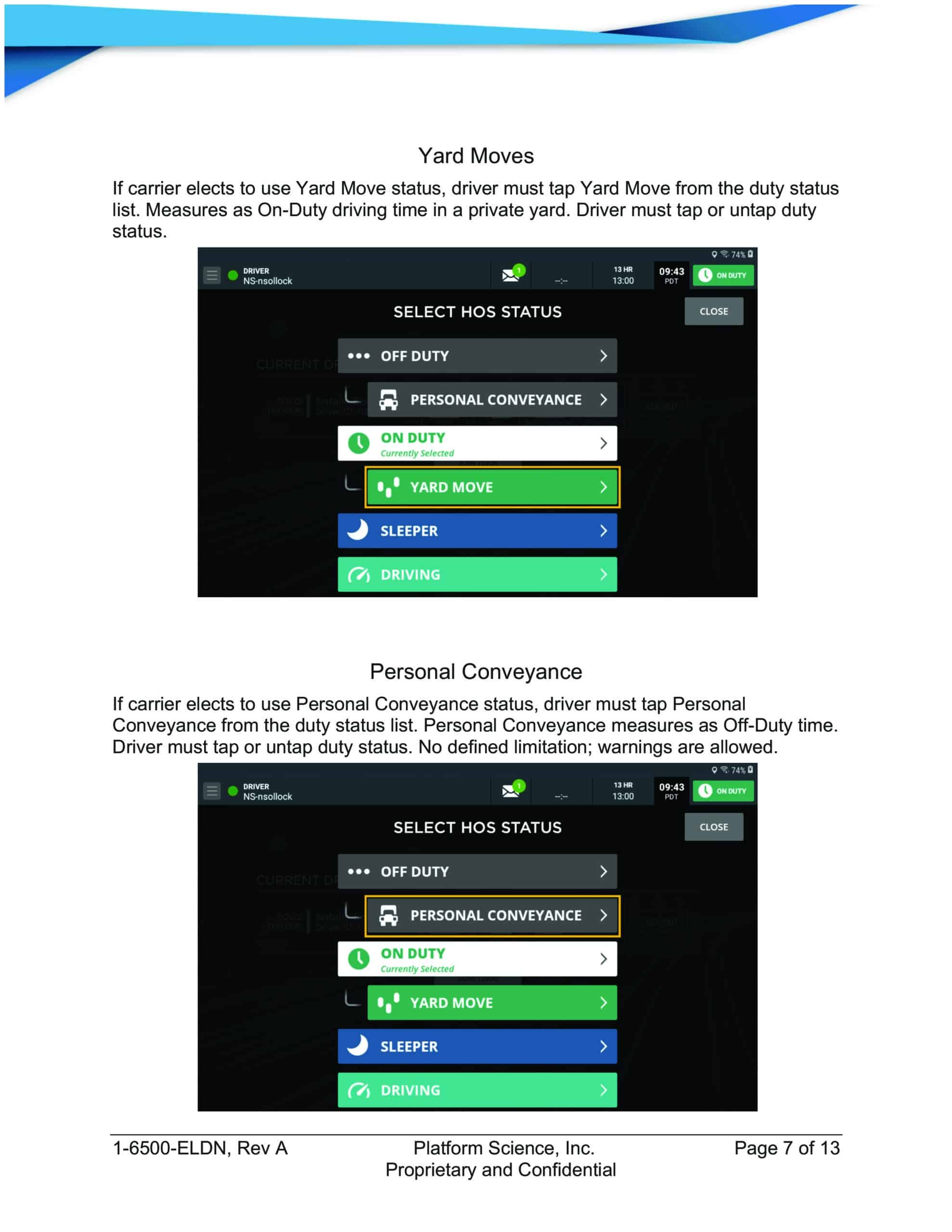
Personal Conveyance
Personal Conveyance may be used in two scenarios:
Driving to do something personal during a 34 hour restart or 10 hour break such as eating, laundry, groceries, etc.
-
Trailer must be empty or Tractor bobtail
-
Trip should be short distances Finding safe and
Finding safe and legal parking after running out of hours at a shipper or consignee.
- Driver must park at the nearest safe and legal parking location and obtain adequate rest before coming back on duty
- Trip should be short distances.
Personal Conveyance may NOT be used when:
A driver is loaded or out of hours unless it meets the exception of the shipper/consignee exhausting your hours.
A driver is doing any work for the company such as picking up a trailer, advancing towards a shipper/ consignee, driving to a repair shop, etc.
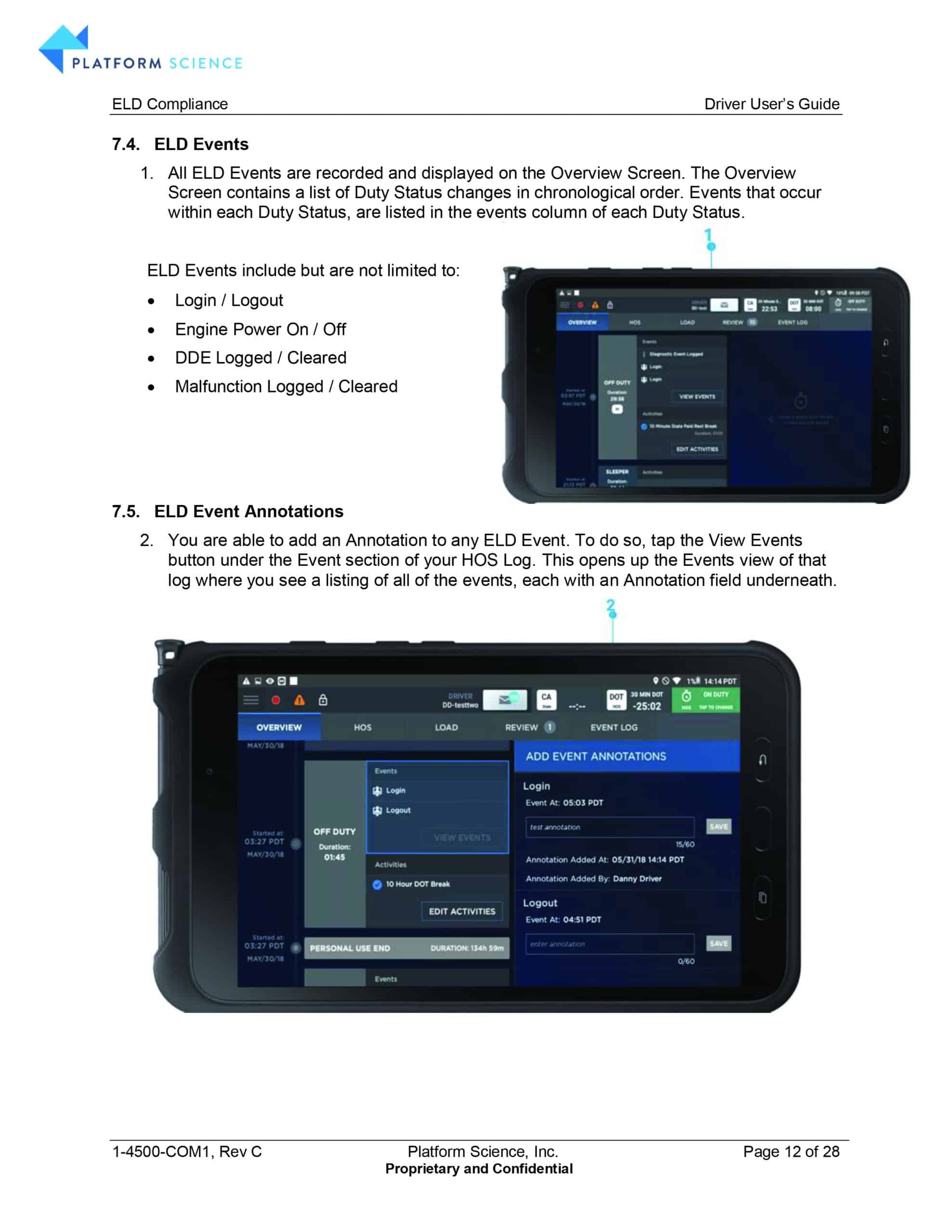
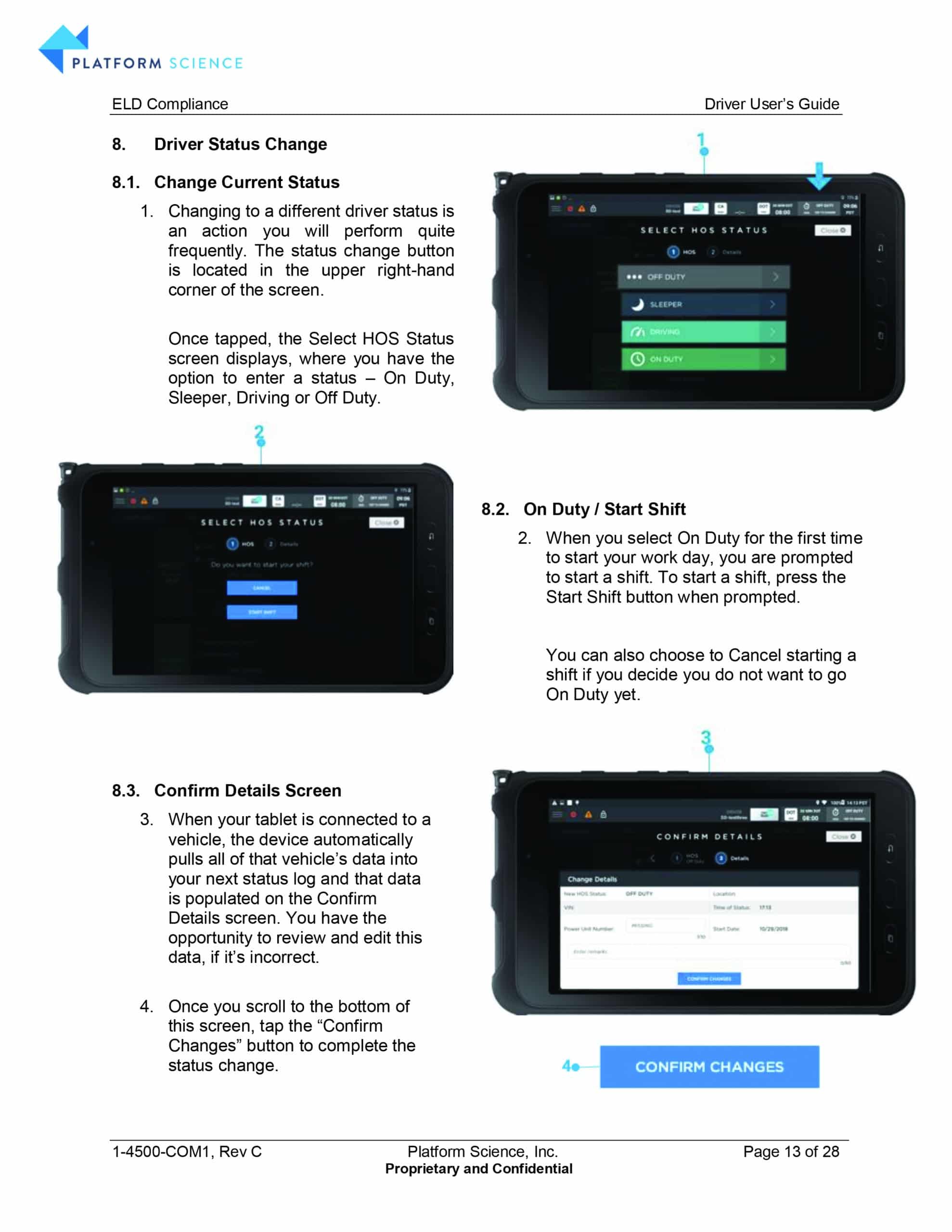
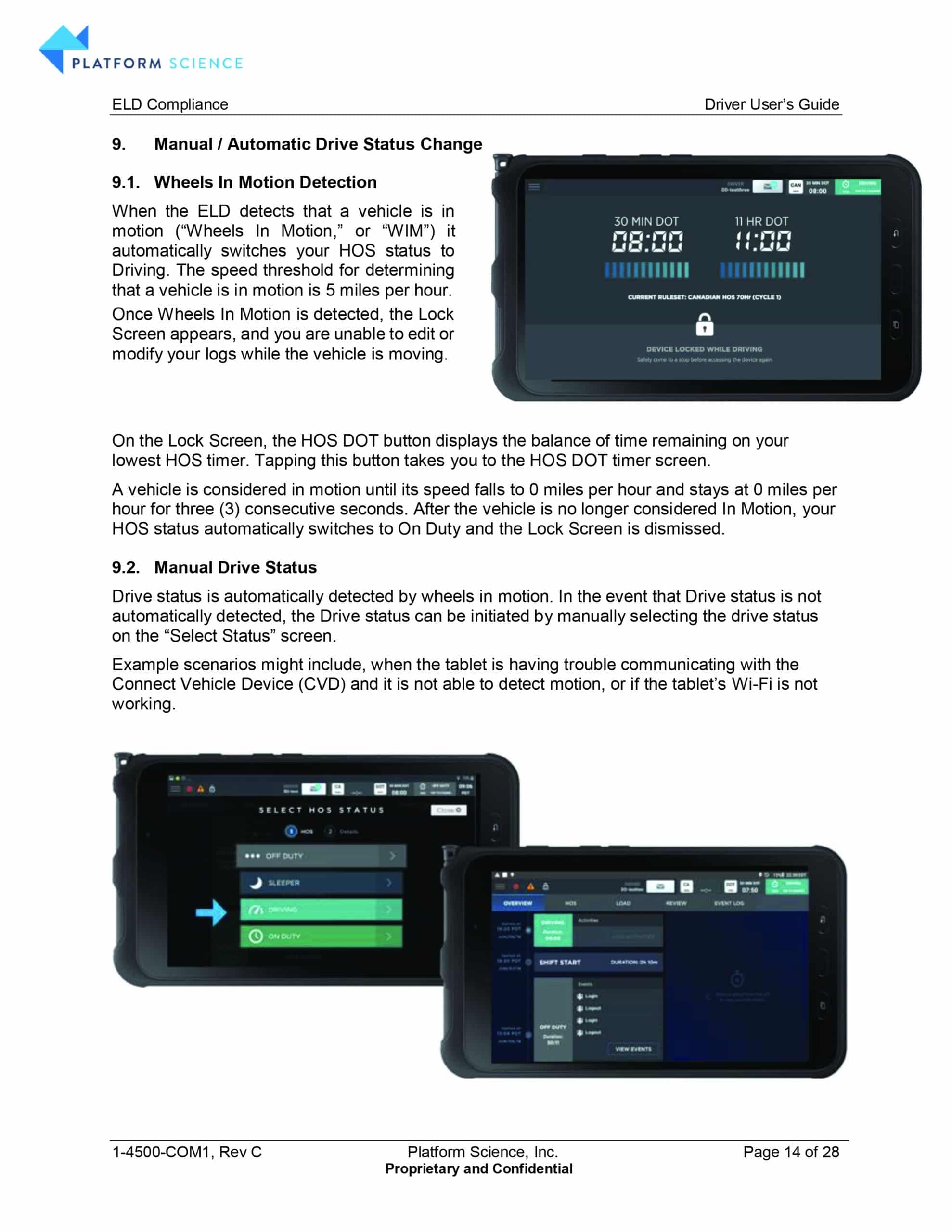
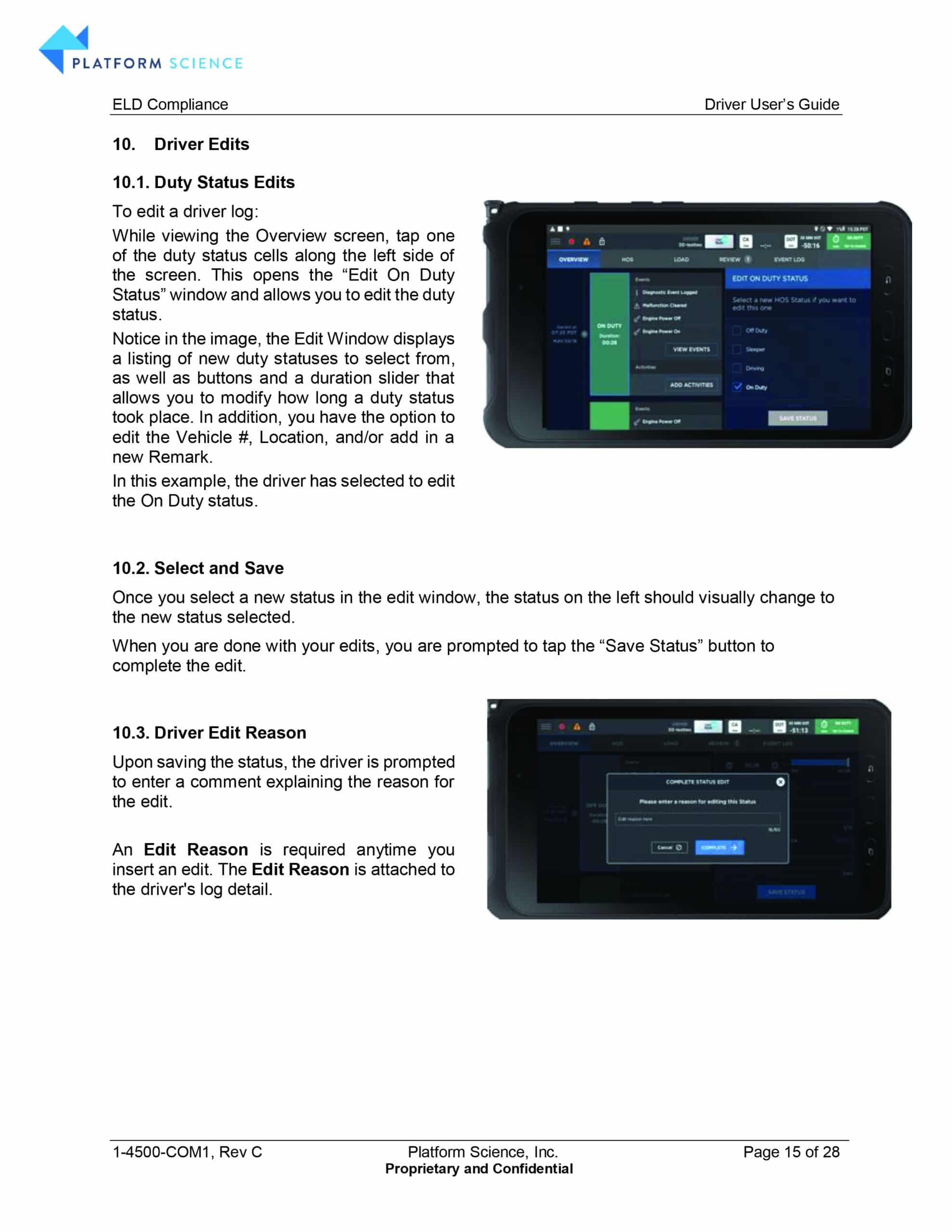
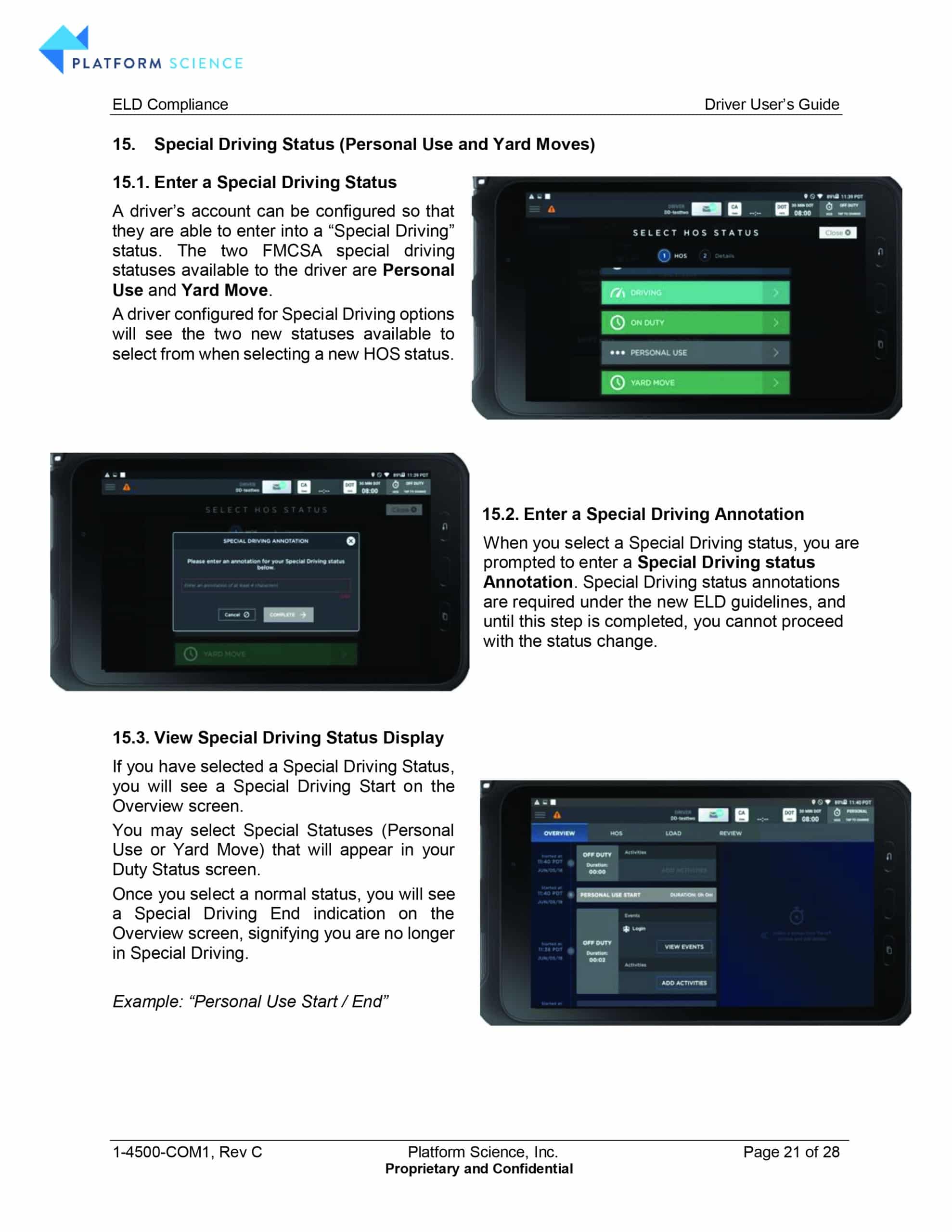
ELD LOGIN
Don’t share any passwords related to the In-Cab Communication Device.
ELECTRONIC LOG MALFUNCTIONS
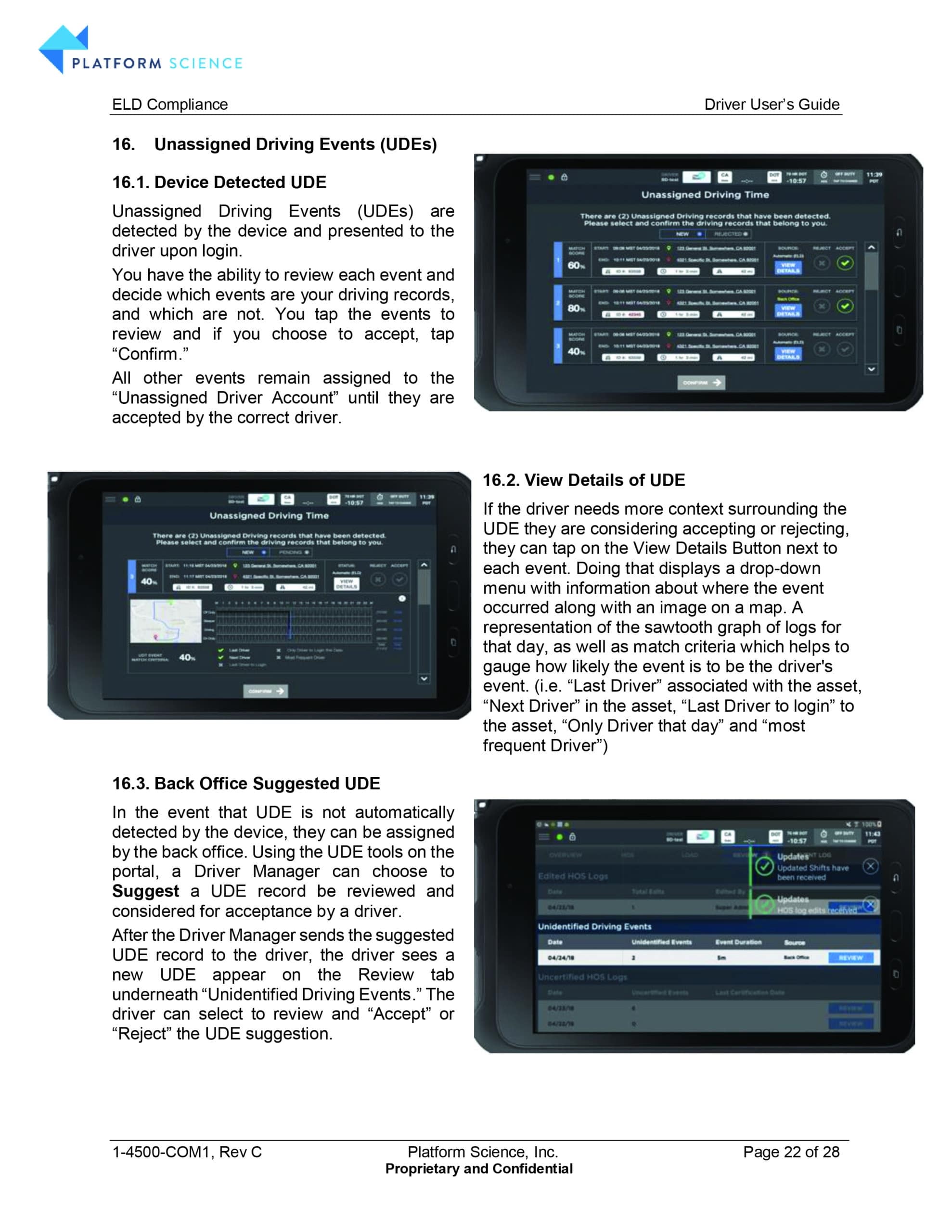
In the event your logging device malfunctions, please notify MVT in writing within 24 hours. This can be done via message through driver hub, e-mail, text, etc. Ensure that your Driver Manager is aware of the malfunction so plans can be arranged to have the device replaced within 8 days. You must use paper logs during the time your device is down. Scan your paper logs in through the driver hub every 24 to 48 hours.
CELL PHONE
D.O.T. regulations prohibit the use of hand-held phones while driving. Handsfree cellphone use while driving or performing a safety-sensitive function is discouraged and may be prohibited. This includes using hands-free headsets, earbuds, etc. for cell phone or radio use.
ENTERING AND EXITING WEIGH STATION
Entering scales or inspection lanes can be a completely new experience for new drivers. Ask your Mentor to review best practices to follow. Review why drivers should signal early and follow signal lights, traffic control devices and posted speed limits. Drive slowly until completely clear of the scale. Be courteous. If you are pulled onto the scale, creep onto it and don’t slam on the brakes. Make gentle movements. Make sure your dash is free of clutter. A cluttered dash is a red flag to D.O.T. and could result in a D.O.T. Inspection.
When you are 2 miles away from a participating MVT scale you will receive a visual and audible alert on the ELD. It’s best that you are in the far right lane so that you can anticipate pulling into the scale. When you are 1 mile away you will receive a 2nd alert. The alert will either tell you to pull into the scale or it will tell you to follow signs.